A Hundred Customers, and Two Years of Mumbling the Price
 By Akhil Suresh NairFounder & CEO, Xena Intelligence · 705 words
What each milestone taught me, and the discount I kept giving for my own insecurity
In April, Xena crossed 100 customers. I wrote a post about it, people were kind in the comments, and then I opened my inbox. My inbox had not been told it was a special day.
I've been thinking about that number again, for a less flattering reason. For a good stretch of the road to those hundred customers, I was charging them as if I owed them an apology.
What each milestone taught me
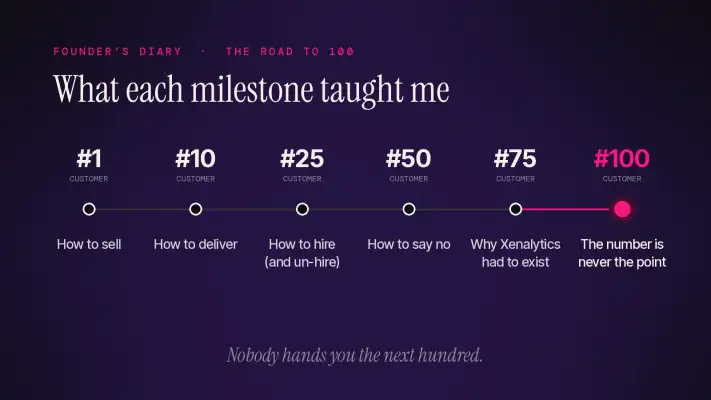
Customer #1 taught me how to sell. I had no deck and no case studies. I had a thesis about Amazon that I believed in more than anything before. That's a strong thing to bring to a sales call. It's a weak thing to put on an invoice.
Customer #10 taught me how to deliver. Winning the deal is one job. Staying up until 3am fixing a listing because a client's Q4 depends on it is a different job.
Customer #25 taught me how to hire. And then how to un-hire. The second lesson was much harder, and nobody warns you it comes bundled with the first.
Customer #50 taught me how to say no. When you're small, every yes feels like oxygen. But a customer who is wrong for you takes the hours you needed for the ones who are right for you.
Customer #75 taught me why Xenalytics had to exist. Our clients didn't need another dashboard. They needed to know what to do on Monday morning.
Customer #100 taught me that the number is never the point.
The discount I gave for my own insecurity
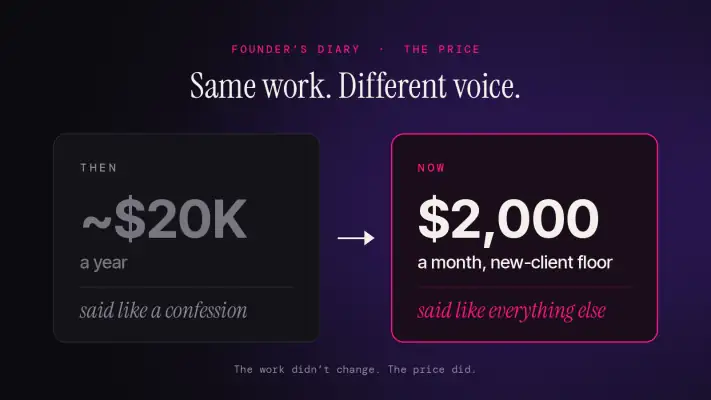
For two years, I priced Xena 360 like I was apologizing for existing. Our average contract was around $20,000 a year. Brands were growing on Amazon off our work, and I behaved as if they were doing me a favor by paying the invoice.
I'd love to tell you I figured this out myself. I didn't. Someone had to tell me to raise the new-client floor to $2,000 a month. Only then did I do the math and see what I'd been doing.
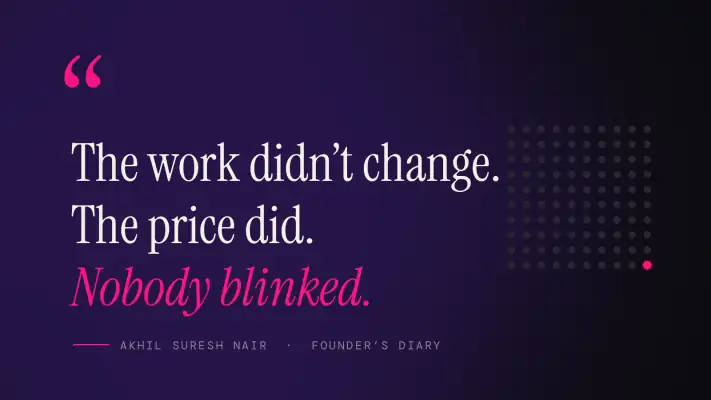
The work didn't change. The price did. Nobody blinked.
I had spent two years bracing for an argument the customers never wanted to have. They were paying for results, and the results were the same. The only person in the room negotiating against Xena was me.
It went deeper than the invoice. Nestlé renewed with us for 24 months, and I still walked into the next enterprise call braced for a no.
I don't think this is a confidence problem you solve once. It acts more like a habit. You notice it, you correct it, and next quarter you catch yourself doing it again in a slightly different outfit.
Selling a decision, not hours
Xenalytics changed how I think about price. When you sell hours, every price feels like a question about whether you're worth it. When you sell a decision someone can act on before their Monday meeting, the price starts to feel like what it is: a number attached to a result.
Who's behind the hundred
Behind the logo wall are real people. There's the tired, underfunded founder betting the next 18 months of their life on an idea. There's the Fortune 500 category manager who needs a win before the quarterly review. And there's the operations lead who has already been burned by three agencies.
Every one of them decided to trust a first-generation immigrant running a company out of Kentucky. Nobody hands you the next hundred.
What I'm practicing now
It's small. Say the price in the same voice as everything else. Then stop talking, which is the hard part.
The silence after a number used to sound like a verdict to me. Most of the time, I suspect, it's just someone doing math. That's what I'd be doing too.
Your turn
If you've been mumbling your price, I'd like to hear what the number is and how long you've been saying it under your breath. Tell me in the comments.
The full entry, with the charts and the rest of the story, is on my site: https://akhilsureshnair.com/founders-diary/hundred-customers-mumbling-the-price (opens in a new tab)
With love,
Akhil
Newsletter
Notes from Akhil
Occasional notes on building Xena Intelligence and SearchPanel from Louisville: what's working, what isn't, and what I'm learning.
Get the next entry. Founder's Diary lands on LinkedIn first. Behind-the-scenes moments go on Instagram.