My Chapter 3, Someone Else's Chapter 20
 By Akhil Suresh NairFounder & CEO, Xena Intelligence · 1,438 words
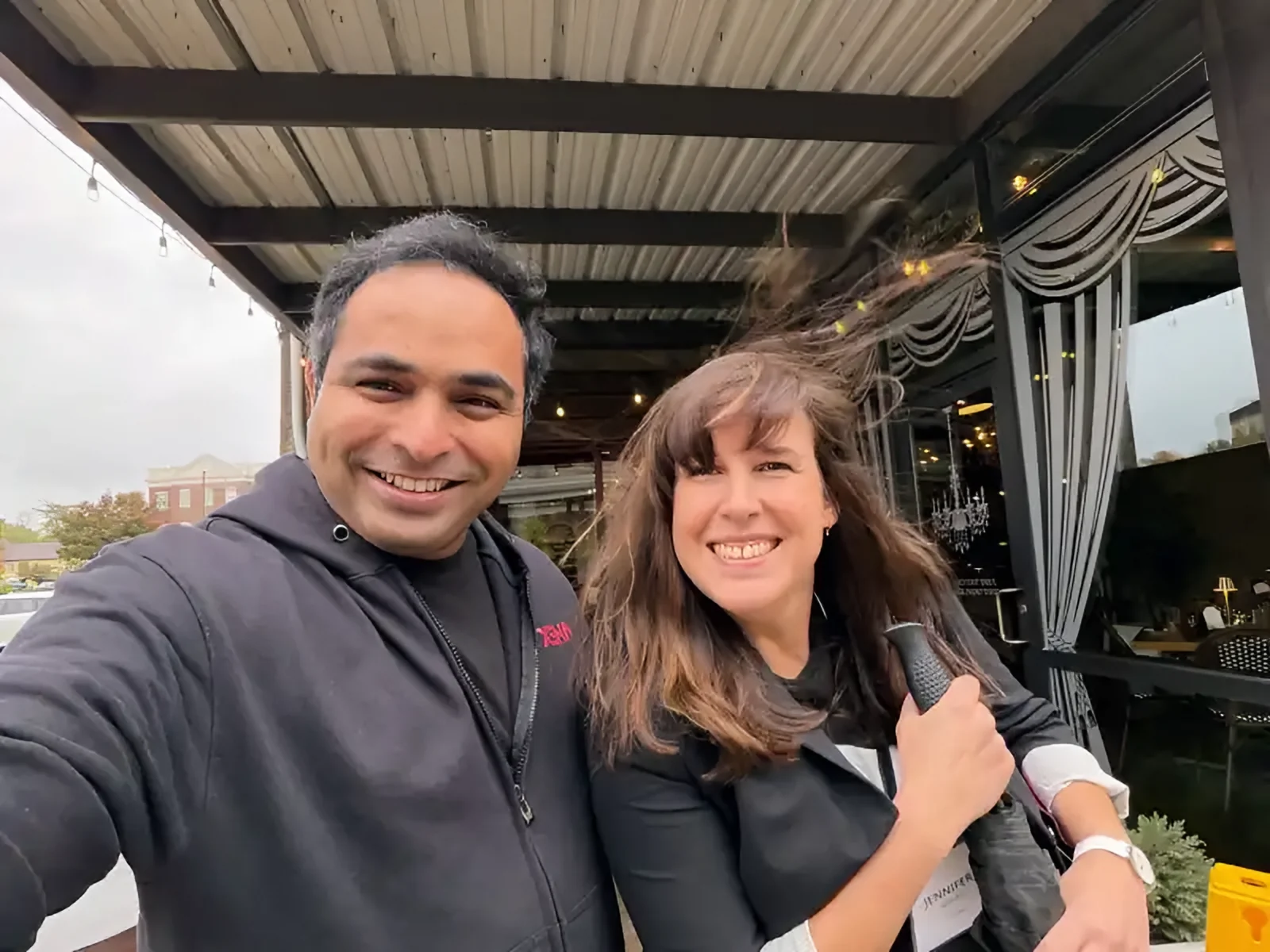
On October 31, 2025, I posted five words on LinkedIn: "You're not behind. Stop comparing." Then I wrote a few hundred more, because I have never once stopped at five words.
The post did well, which made me suspicious of it. Advice that gets a lot of likes is usually advice everyone already agrees with and nobody follows. I include myself in the second group. I wrote it on a Friday, and I'd bet I compared myself to some other founder before the weekend was over.
So a year later, here is the longer version. It has two parts. The first is the one I wrote about: comparing your life to other people's feeds. The second I only figured out this September, and I think it's the bigger problem. Most founders aren't only measuring themselves against the wrong people. They're also reading their own position off a map that is a few years old.
The scroll
When I started building Xena, I used to scroll through LinkedIn and watch other founders announce big raises, new hires, and shiny partnerships. Meanwhile I was fixing bugs, trying to convince our first customers, and stretching every dollar to make payroll. I said all of that in the post, and none of it was an exaggeration. If anything, I left out how often I refreshed the feed to check whether anyone had announced something new in the last nine minutes.
Every post felt like a reminder that I wasn't "there" yet. Whatever there meant.
The trouble with a feed is that it's an edited highlight reel posing as the news. Nobody posts about the month payroll was tight. Nobody posts the investor meeting that ended with "keep us posted," which is how investors say no without the paperwork. I know this because I have also never posted those things. My feed has stages, trophies, and a Nasdaq screen in Times Square on it. If the early version of me had scrolled past the 2026 version, he would have felt behind too, and he would have been wrong about what he was looking at.
Chapter 3 and Chapter 20
The line from that post that people quoted back to me most was the one about chapters. Stop comparing your Chapter 3 to someone else's Chapter 20.
I still like it. It's tidy, and it lets you off the hook in a way that also happens to be accurate. The founder announcing a Series B didn't start there. You're seeing a page from late in their book and holding it up against an early page of yours.
But the chapter idea has a hidden assumption. It assumes you know which chapter you're in. I didn't, and it took me most of a year to notice.
The chapters, as they happened
- 2017 NoBabson, near BostonCame to the US through Babson's Global Entrepreneur-in-Residence program with a suitcase.
- The pandemic NoXena startsTurned consulting work for small e-commerce brands into an AI company.
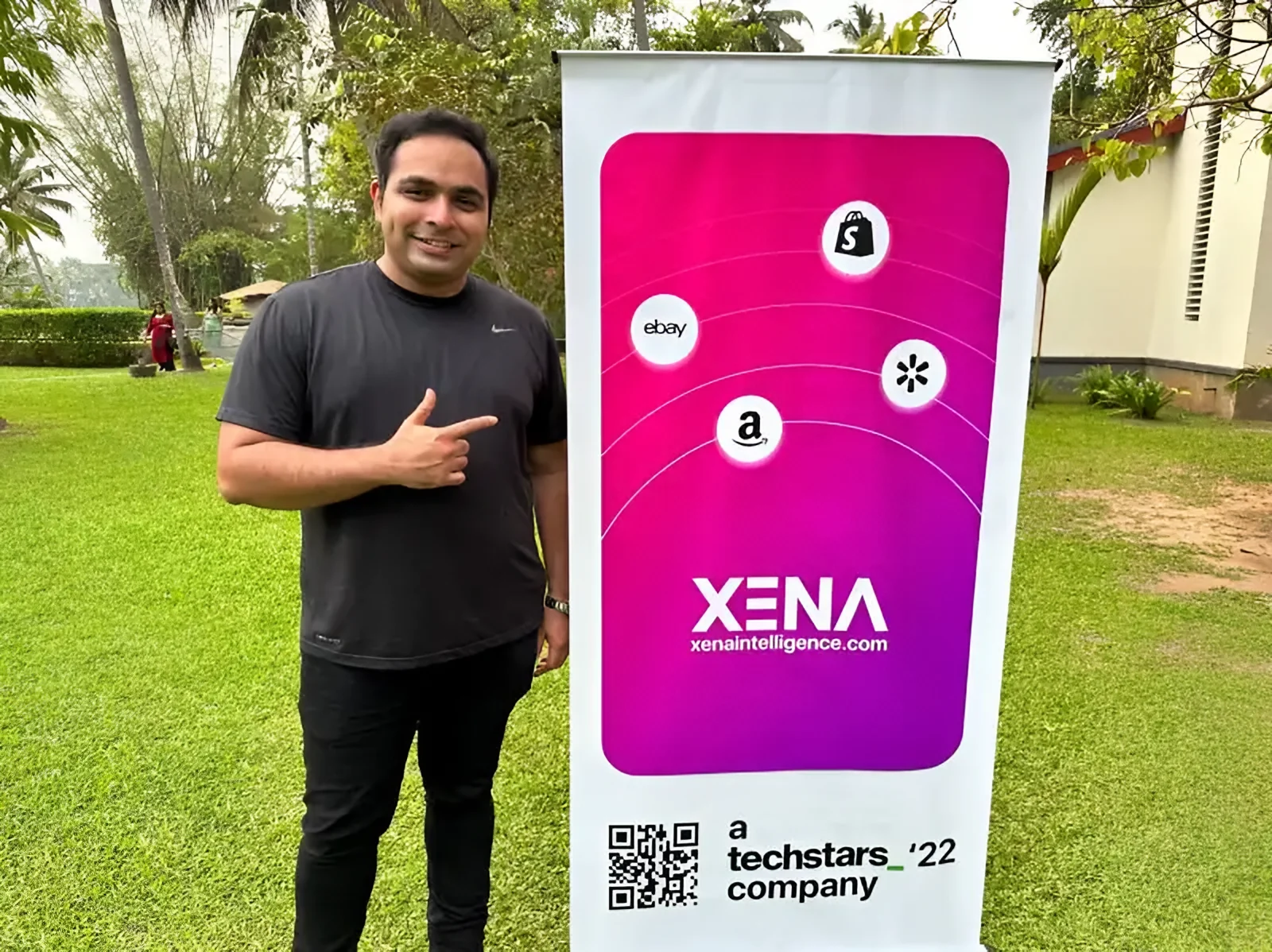
- 2022 NoRender, Vogt, TechstarsWon Render and the Vogt Awards, moved to Louisville, got into Techstars NYC.
- Nov 2022 NoFrom 2 to 20Grew the team from 2 people to 20 in about a year.
- 2025 NoSAAS NORTH, the LOUIESWon SAAS NORTH PitchFest. Named Louisville's Favorite Founder.
- 2026 YesVenture Atlanta, MSISVPitched at Venture Atlanta. Joined the Morgan Stanley Inclusive & Sustainable Ventures 2026 cohort.
From my LinkedIn posts and the press list on this site.
The estimate runs late
On September 29 this year I wrote that most founders have no idea how good they are, because their internal estimate of themselves runs about three years behind reality. I called myself Exhibit A, which was generous to the other exhibits.
When I applied to Techstars, I told myself I was doing it for the feedback. That is founder code for "I don't think I'll get in." I was a solo founder with no network in New York, building an AI company for CPG brands. I got in, and then spent the whole program waiting for someone to tap me on the shoulder and tell me there had been a clerical error.
That's the second half of the comparison problem. When you compare yourself to someone's feed, you're using their best pictures. When you compare yourself to your own memory, you're using your worst ones, and some of them are old. I was still carrying the early version of me around in my head, the one with no customers and a lot of slides. He was a nice guy. He was also out of date.
How I rated my own position vs. what the record said
IllustrativeNot real data. A rough picture of the gap I described in my Sept 29, 2026 post. The middle bar matches my line about real numbers "with 30% shaved off for emotional safety."
I wrote in that post that founders put "conservative projections" in their decks, which is just their real numbers with 30% shaved off for emotional safety. I've done it. The deck was technically accurate. It was just accurate about a smaller company than the one I was running.
Pitch competitions, entered with a fake mustache
I've won more than $1.65 million in pitch competitions. The number of those I entered expecting to win is zero. I entered every one of them thinking "let's see what happens," which I described in September as ambition wearing a fake mustache so rejection won't recognize it.
The record vs. the forecast
From my LinkedIn post of Sept 29, 2026 and the milestones on this site.
You'd think a track record like that would update the forecast. It doesn't, or at least it didn't for me. Each win got filed as luck, and each loss got filed as information. That is a very efficient system for staying exactly as nervous as you were on day one.
The founders I see doing this aren't fishing for compliments. They really do believe the old number. That's what makes it expensive. In September I wrote that nobody is coming to correct your self-estimate upward. Investors won't, because they'll use your low number in the negotiation. Customers won't, because they'll happily take the discount. And your team won't, because they're watching you to decide how much to believe in the company.
What "winning" meant in the post
The part of the 2025 post I'd underline today is the definition at the end. I wrote that I've met founders who raised $10 million and secretly want out, and others who make $200,000 a year and wake up happy every day because they built the life they wanted.
You're winning if you're building the life you actually want. Not the one that looks impressive on TechCrunch.
I put that in because "stop comparing" on its own is useless advice. You can't stop measuring. Founders measure everything. What you can do is pick the scoreboard.
The scoreboard I wrote down a year ago was pretty plain. If your company lets you spend more time with your family, you're winning. If you're solving a problem you care about, you're winning. If you're learning and waking up with a purpose, you're ahead. None of those show up in a funding announcement, which is the point. They also don't show up in anyone's feed, which makes them hard to compare, which is the other point.
Reading the evidence
So what do you do with a self-estimate that runs three years late? In September I said the answer is the most unnatural move in the founder repertoire: look at the actual evidence. The renewals, the revenue, the things that worked. Then price, pitch, and ask like the person the evidence says you are.
I'll add one thing from the last year of trying it. The evidence is easier to read when someone else holds it up. Looking back at my own timeline above, I can see the 2022 chapter clearly now. Render, the Vogt Awards, the move to Louisville, Techstars, and a team that went from 2 to 20. At the time it felt like improvising with a deadline. From here it reads like a company finding its footing. I didn't get smarter about 2022. I just got far enough away from it.
That suggests a cheap trick, and I'll offer it with the usual warning that I don't always follow my own advice. When you catch yourself feeling behind, ask how the version of you from three years ago would read your current week. My guess is he'd be impressed, then confused about why you look so worried.
Where I'd put the line now
At some point "underdog" stops being a strategy and becomes a story you tell yourself so you don't have to act like you belong. I wrote that in September. I still think it's the most useful sentence in that post, and the hardest one for me to live by. I like being the underdog. It's comfortable. Nobody expects much, and every win feels like a surprise.
But Xena isn't the company with a few sketches and no customers anymore. The people who work here, the brands who trusted us before there was an award to point to, and the family at home who pays the costs that don't send invoices deserve a founder who reads the current page.
So here's the updated version of the five words. You're probably not behind. You might be ahead and not have heard the news, because the person who'd tell you is you, and you're running about three years late.
I write the longer version of these in my Founder's Diary newsletter on LinkedIn (opens in a new tab), and the everything-else version shows up on Instagram (opens in a new tab). If you run a brand and want to talk about Amazon, Walmart, or what AI answers say about your products, my calendar is open (opens in a new tab). I'll try to show up as the current version.
Akhil
Newsletter
Notes from Akhil
Occasional notes on building Xena Intelligence and SearchPanel from Louisville: what's working, what isn't, and what I'm learning.
Get the next entry. Founder's Diary lands on LinkedIn first. Behind-the-scenes moments go on Instagram.