The Costs That Don't Send Invoices
 By Akhil Suresh NairFounder & CEO, Xena Intelligence · 1,288 words
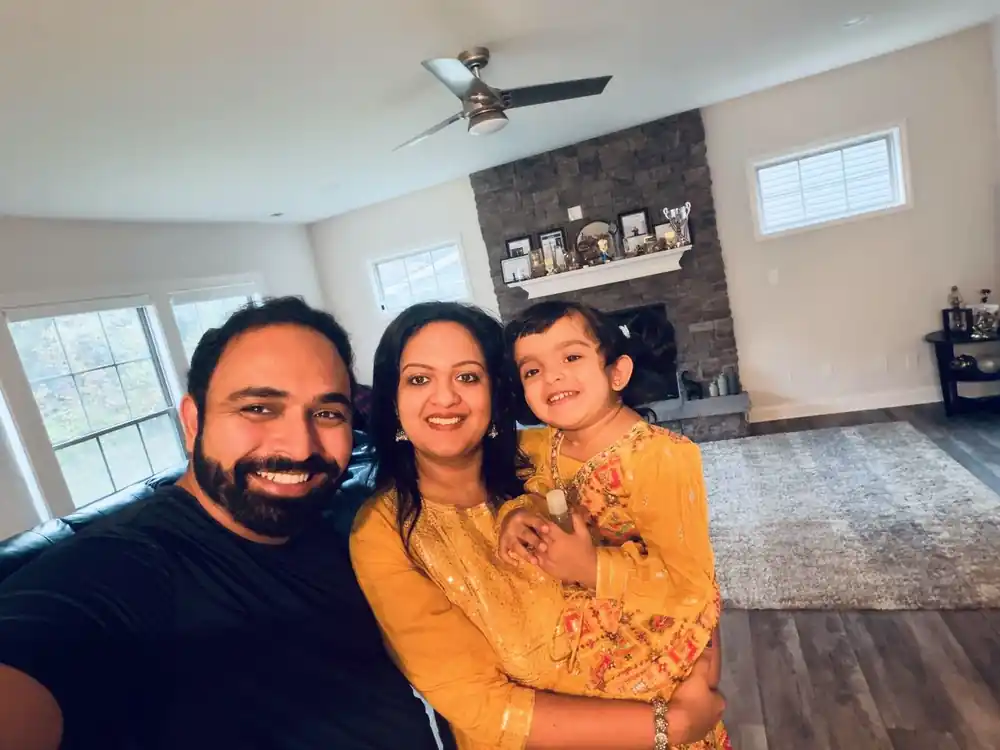
Every cost Xena has ends up in the books somewhere, with a date and a category next to it. If I want to know what we spent on software in August, I can find out in about a minute, and then I can feel bad about it in detail.
The costs I wrote about on LinkedIn on October 23 aren't in there. There is no category for a dinner where my body sat at the table and my mind stayed at the office. Nobody has ever sent me an invoice for the call I took in the hallway. If they did, I would probably pay those faster than I pay attention.
At the end of that post I wrote five rules for myself. A few weeks have gone by, which is long enough to find out whether the person who wrote them follows them. So this is the longer version, plus a check on the author.
The suitcase and the certainty
I left Kochi with a suitcase and a lot of certainty. I came to the US through Babson in 2017, and I was sure about most things then, including the idea that building a company would be the hard part.
The company has been hard in all the ways people warn you about. That part I was ready for. What I wasn't ready for was that the harder job would be remembering why I was doing it, on an ordinary Thursday, with a dozen Amazon reports open and dinner getting cold in the next room.
They don't tell you about the dinners you miss, the calls you take in the hallway, or the way your mind stays at the office while your body sits at the table.
I want to be careful here, because I know how lucky I am. I have a family that backs me. I wrote a whole newsletter edition about founders who don't have that, and I meant every word of it. This post is about a different problem. Even when the people at home are fully on your side, the company still sends them a bill, and they pay it without being asked.
Two clocks, ten and a half hours apart
My parents live in India. In the post I said they're thousands of miles away and still somehow in every decision I make. Both halves of that are true, and the second half is not always convenient.
The first half is mostly math. Kochi doesn't change its clocks. Louisville does. So from early November to mid-March, Kochi is ten and a half hours ahead of me, and for the rest of the year it's nine and a half. The clocks here went back on Sunday, so this week I'm redoing the conversion in my head again, which is a strange thing to have to recalculate about your own parents twice a year.
Calling home from Louisville, November to March
- 7:00 AM in Louisville Yes5:30 PM in KochiTheir evening, my first coffee. The best window, if I'm up for it.
- 12:30 PM in Louisville No11:00 PM in KochiLate for them. Usually a text instead of a call.
- 6:00 PM in Louisville No4:30 AM in KochiI'm finally free, and they are asleep.
- 9:30 PM in Louisville Yes8:00 AM in KochiTheir morning, my night. Works if I haven't fallen asleep first.
The windows that work for both of us sit at the very edges of my day. Those are the same edges the company wants. Every founder I know has some version of this fight over the first and last hour. Mine just comes with a time-zone converter.
My dad is a scientist, and I've written before about the product he believed in that never made it to market, so I won't tell that story again here. I'll only repeat the part he taught me without ever saying it. You do the work with the people who believe in you, not instead of them. I wrote that down for the first time in October. I've been acting on it for about five years, with mixed results.
The hallway
I didn't say which hallway in the post. It doesn't matter much. Any hallway close to a dinner table will do. It's where you go when a call is too important to ignore and not important enough to leave the house for.
The trouble with the hallway call is that it's usually short. Twelve minutes, say. Nobody at the table would call twelve minutes a crisis. But I come back with the call still running in my head, and that version doesn't end when I hang up.
Where my attention goes during a dinner with a hallway call in it
IllustrativeNot real data. My own guess at how it feels, as minutes of a 100-minute evening. My wife might score the last bar lower.
That middle bar is the expensive one. The call cost twelve minutes. The replay cost the evening. Founders talk a lot about time management, and I think a good part of the problem is attention management with a better name.
The part of the week with no audience
On October 14 I pitched Xena at Venture Atlanta. I had applied four years in a row, and I was slot 27 of 28, so I had a long time in a hallway to think about it. When I got home I wrote that eighteen people at Xena built the work I got to present. I also wrote that Sana held our life together in Louisville with our daughter while I was in Atlanta being a founder in public.
I meant that as the plain truth, not as a nice line. The pitch had a room full of investors and a hallway full of founders. The other half of that week had no audience at all.
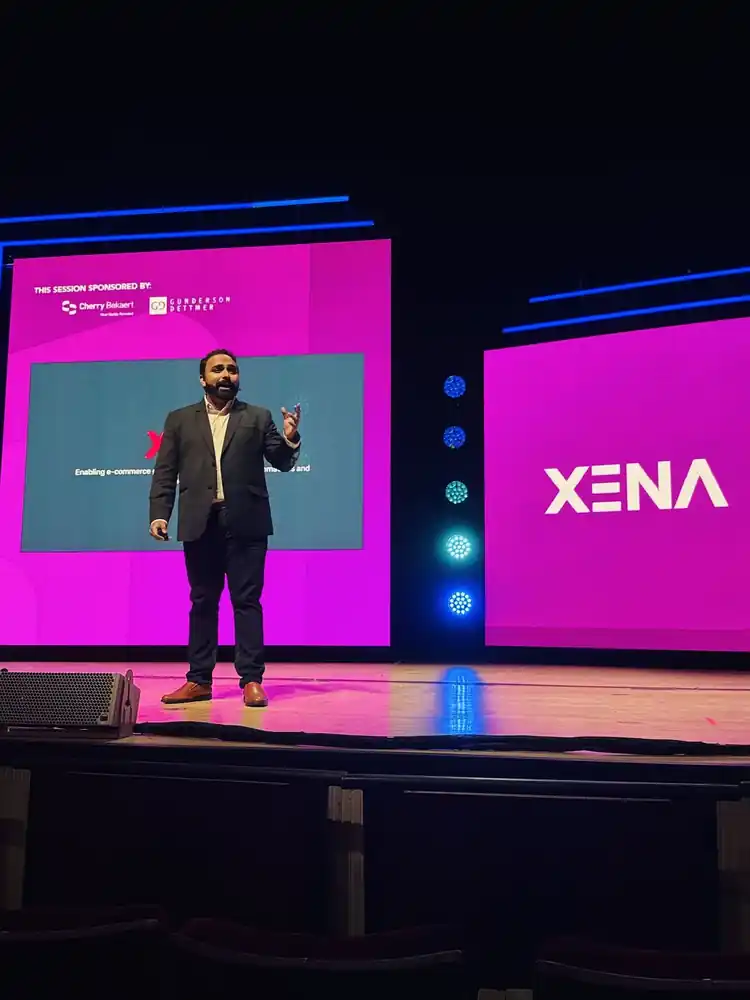

I've noticed that I get thanked for the part with the microphone. People say well done, a few of them say it on LinkedIn, and I say thank you. Nobody congratulates the person who handled everything at home that week. In the post I called her the person who has never once cared about my valuation. She also never asked for a slide in the deck, which, having seen some of my slides, is a sign of good judgment.
A few real numbers from October
Time difference: India Standard Time is UTC+5:30 with no daylight saving; Louisville is UTC-5 in winter. The other numbers are from my LinkedIn posts of Oct 19 and Oct 23, 2026.
Kiara has no idea what ARR is
My daughter does not know what ARR is, and she has shown no interest in finding out. In the post I said she has made me better at prioritizing than any framework ever did. I stand by that.
Kids are very clear about what counts. A board deck doesn't count. A renewal doesn't count, even a good one. Being there counts, and being there with your phone face up on the table counts for less. I didn't need a consultant to explain that. I needed one look from a small person who has decided I'm not listening.
Your company will survive you leaving at 6pm. Your kids will not remember the board deck. They will remember who was there.
Checking on the five rules
I posted those rules at 6 in the morning, which tells you something about how rested the author was.
The 6pm rule I keep most days. Not every day. The company has survived every one of those evenings, which is a little rude to the part of me that thinks it can't run for an hour without me.
The rule about the people closest to you being the mission, just in a form that doesn't send invoices, is the one I like best, mostly because I wrote it and it gave this post its title.
The rule I break most is the one about rest. "Rest is part of the work" is a lovely sentence to read. I wrote it, and I also wrote it at 6 AM, so I'm not the most credible witness.
And then there's saying thank you out loud. I'm doing it again here, in public, and I know public is the easy place to do it. The harder version happens at home, where there's no like button and the person can tell whether you mean it.
In the post I admitted that some weeks I get it right and some weeks I'm the guy checking Slack at a birthday party. That's still accurate. I'd like the ratio to move. I'm not going to pretend I have a system for it.
I write the longer version of these in my Founder's Diary newsletter on LinkedIn (opens in a new tab), and the family-and-everything-else version shows up on Instagram (opens in a new tab). If you run a brand and want to talk about Amazon, Walmart, or what AI answers say about your products, my calendar is open (opens in a new tab). Until about six.
Akhil
Newsletter
Notes from Akhil
Occasional notes on building Xena Intelligence and SearchPanel from Louisville: what's working, what isn't, and what I'm learning.
Get the next entry. Founder's Diary lands on LinkedIn first. Behind-the-scenes moments go on Instagram.