Some Founders Are Privileged. Some Are Not. Both Will Tell You They're Self-Made.
There is a specific kind of founder I meet at every conference, and I have learned to spot him within about ninety seconds, usually somewhere between the handshake and the part where he explains that he "bootstrapped" his company, by which he means his parents gave him $1M and he did not ask for more.
I want to be careful here, because this is not a bitterness post. Bitterness is a terrible business strategy and an even worse personality. This is more of a field report, written from the inside, by someone who came from Kochi, a coastal city in Kerala that most of my American friends cannot find on a map even when I am pointing directly at it, and who now runs a company from Louisville, Kentucky, a city most of my Indian friends also cannot find on a map, which means I have achieved perfect geographic obscurity on two continents and I am weirdly proud of it.
The Vocabulary Problem
The first thing you learn about privilege in the startup world is that nobody uses the word. There is an entire replacement vocabulary.
"I raised a friends and family round" means my friends and family have money, which, if you think about it for more than four seconds, is the entire ballgame. My friends and family are wonderful people who would give me their last rupee, and I would never take it, because it is their last rupee.
"I took a year off to figure things out" means there was a financial floor under me the whole time, invisible but load-bearing, like the netting under a trapeze artist. I did not take a year off to figure things out. I figured things out on nights and weekends while doing my MBA at Babson, while my visa status hung over every decision like weather, while I ran spreadsheets on how many months of runway existed between me and a very awkward phone call home.
"I failed fast and learned from it" means failure was survivable. This is the big one. This is the one nobody talks about. The single greatest privilege in entrepreneurship is not money, or networks, or a last name that opens doors. It is the ability to fail without the failure being terminal. Some founders fail and it becomes a slide in their next pitch deck. Other founders fail and it becomes a story their entire extended family tells at weddings for the rest of recorded time.
What I Had Instead
Here is what I had when I started: a degree, a work ethic that borders on a medical condition, and an unreasonable belief that if I could just get in the room, I could win the room.
So I got in rooms. Specifically, pitch competition rooms, which are the great underrated equalizer of the startup world, because pitch competitions do not care who your father is.
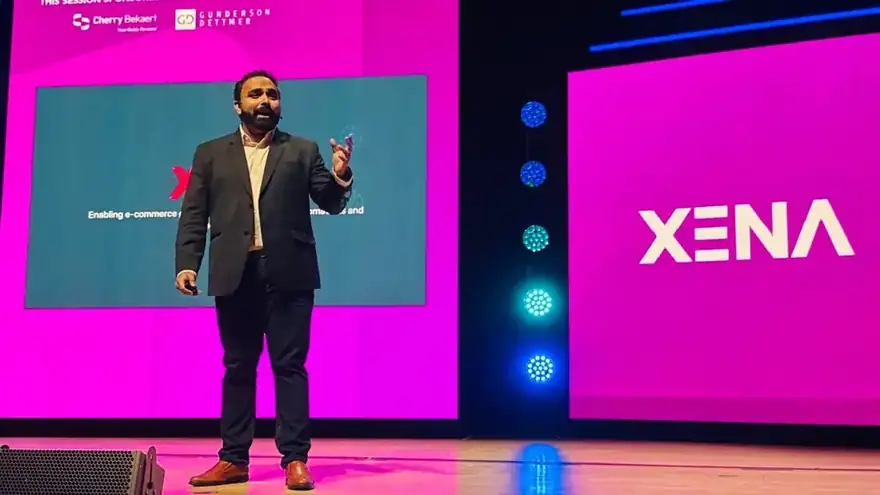
They care whether you can stand in front of judges and make them believe. Over the years I have won more than $2 million in pitch competitions, which sounds glamorous until you understand what it actually was, which was me, alone, rehearsing the same seven minutes in hotel bathrooms and airport gates and once, memorably, in a parking garage stairwell because the venue had no green room and the stairwell had excellent acoustics.
People ask me why I did so many competitions. The honest answer is that non-dilutive capital was the only capital that would take my calls.
Venture capital, in the early days, has a pattern-matching problem, and I did not match the pattern. I was a solo founder, which VCs treat as a character flaw. I was an immigrant, which meant every plan had an asterisk on it. And I was building for CPG brands on Amazon and Walmart, which is not the kind of thing that gets you invited to the cool parties. So I stopped waiting for permission and started collecting oversized checks, the cardboard kind, which do not fit in overhead bins, a fact I have now confirmed experimentally many times.
Tom and Paul, or, The Privilege I Actually Envy
My first clients ever were two gentlemen named Tom and Paul who run a company called Go2Kits out of Keene, New Hampshire. They took a chance on me when I had, generously, nothing. No case studies, no logos on the website, no website worth mentioning. What I had was a pitch and a promise, and they said yes, and I have thought about that yes more times than they will ever know.
Here is the thing about not being a privileged founder: you remember every single person who bet on you before it was rational to do so, because there weren't that many of them, and each one was a small act of faith you now carry around like a debt you actually enjoy owing. Tom and Paul went from clients to something closer to family. When you start with nothing, your first believers are not line items in a CRM. They are load-bearing people.
I suspect founders who start with warm intros to forty investors do not develop this particular muscle. When yes is abundant, no individual yes means much. That is the one privilege I genuinely do not envy. Scarcity taught me gratitude, and gratitude, it turns out, compounds better than most seed rounds.
The Part Where I Complicate My Own Argument
Now, the twist, because every honest diary entry needs one: I am privileged too.
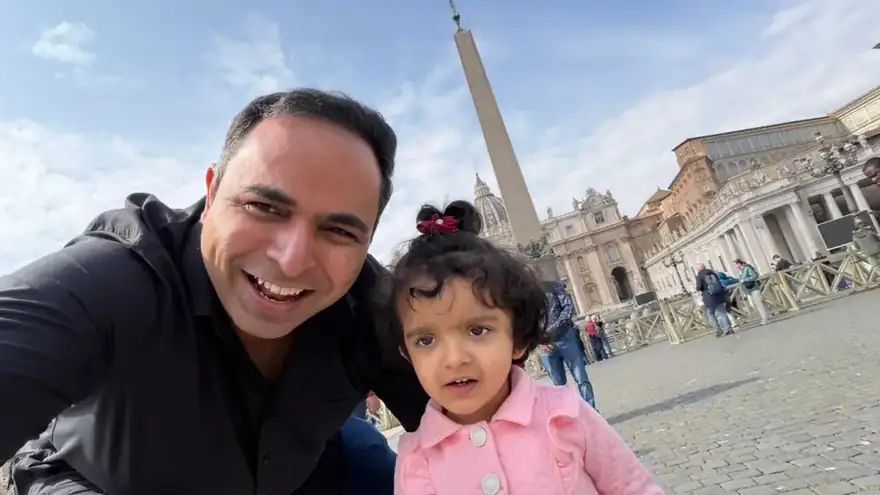
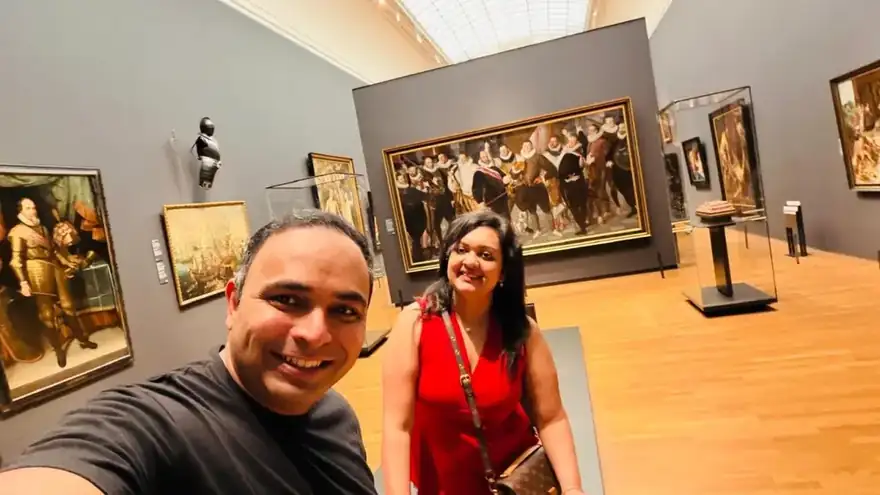
I had parents who worshipped education. I had an English-medium schooling in a country where that alone reroutes your entire life. I got into Babson, the #1 school in the world for entrepreneurship, and Babson gave me a platform, and platforms are privilege wearing a lanyard. My wife has absorbed the volatility of this life with a grace I have not earned, and my two-year-old daughter thinks I am employed as a person who talks to a laptop, which is technically accurate and spiritually devastating. A supportive family is a privilege so large that founders who have it usually forget to count it.
So the honest version is not "some founders are privileged and some are not." The honest version is that privilege is a stack, and everyone's stack is different, and the founders who annoy me are not the ones with tall stacks. They are the ones who inherited a tall stack and then wrote a Medium post about grit.
Say what you had. That is my entire ask. If your uncle wired the first check, say so. It does not diminish what you built. What diminishes what you built is the pretending, because the pretending sets a fake benchmark for every kid from Kochi, or Keene, or wherever, who is comparing their real, unglamorous starting line to your fictional one and concluding that something is wrong with them.
Nothing is wrong with them. They are just playing the game on a harder difficulty setting, without the tutorial, while the game insists everyone started at the same screen.
Closing Entry
It is late in Louisville as I write this. I now run a $25M startup with over 100 clients like Nestle and Dow.
My daughter is asleep, the house is quiet, and somewhere out there a founder with a trust fund and a founder with a night job are both awake, both anxious, both convinced they are one good quarter away from everything changing. In that specific, sleepless way, we are all the same.
But we did not start the same, and the sooner our industry can say that out loud without flinching, the sooner we can stop wasting all this energy on origin-story theater and spend it on the only question that ever mattered, which is not where you started.
It is whether the people who bet on you early were right.
Tom and Paul were.
I am still working on the rest.
With love, Akhil.
Get the next entry. Founder's Diary lands on LinkedIn first. Behind-the-scenes moments go on Instagram.