120 Seconds on Stage, 100,000 Minutes of Practice
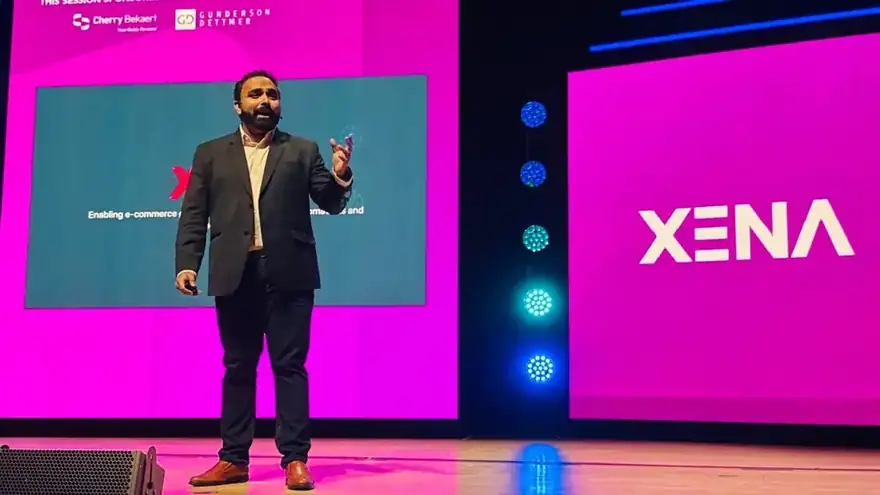
I have paralyzing stage fright, which is an inconvenient condition for a man who has won more than $1.65 million by standing on stages.
I want to start there because every pitch story on this platform starts with the win. The confetti, the oversized check, the photo where everyone is holding the check at slightly different heights so it looks like a cardboard staircase. Mine usually start somewhere less photogenic. Usually a bathroom. Sometimes a stairwell.
In September 2025 I was one of five finalists in the software category at the RALLY pitch competition in Indianapolis. Up to $1M in investment on the line. Hundreds of people in the room. The time limit was two minutes.
Two minutes. That is barely enough time to say my name and my company's tagline, and in my case to hear my own heartbeat louder than either of them.
I had practiced that pitch, and the hundreds of versions that came before it, for more than 100,000 minutes. I did the math later because I am the kind of person who does the math later. 100,000 minutes is about 1,667 hours. That is roughly 69 full days of my life, awake, talking to a wall about e-commerce analytics. The ratio of practice to stage time works out to about 50,000 to 1, which is worse odds than most of the startups in that room were facing, mine included.
We won. I did not expect to. Explaining it back home was its own pitch, because if you have ever tried to explain a pitch competition to an Indian parent, you know it lands somewhere between a quiz show and a job interview where nobody gets hired but someone gets a large cardboard rectangle.
This edition is about those 120 seconds and the 100,000 minutes underneath them. It is also, because people keep asking, a fairly practical guide. If you are a founder about to pitch for money in front of strangers, I hope some of this saves you a few thousand minutes. You can spend them on sleep. I hear it is nice.
Why I Did So Many of These
The honest reason is unglamorous. Pitch competitions were the only money that would take my calls.
When I started Xena I was a solo founder, an immigrant on a student visa, building software for consumer brands on Amazon and Walmart. Venture capital did not look at that profile and see a pattern. It saw three asterisks. Pitch competitions did not care about the asterisks. They cared whether I could stand up and make a room believe something in a fixed amount of time.
So I entered. A lot. More than 40 of them over the years, from one-minute pitches to ten-minute ones, from rooms with 100 applicants to ones with more than 10,000. I lost plenty. I want to be clear about that, because "$1.65 million" sounds like a career and the truth is closer to a long series of polite emails that begin with "Thank you for your interest."
Some of the ones I did win changed the shape of my life, not just the bank balance. The Render Competition came with a $100,000 investment from Render Capital and a condition that I move the company to Louisville. I had no particular plans to live in Kentucky. Now I am a Kentucky Colonel and I sit on the board of the Louisville Orchestra, which is a sentence that would have confused my younger self deeply. The Vogt Awards gave us a $25,000 non-dilutive grant, and every dollar of it went into customer acquisition, because my father raised me to believe a rupee without a job is a rupee in danger. The SAAS NORTH PitchFest in Toronto came down to a live audience vote, and the audience picked us. That one did something to my nervous system that I am still processing.
The money mattered. I will not pretend it did not. But if I am honest, the part that compounded was something else. Every competition forced me to explain Xena more clearly than I had the week before. Customers do not give you a hard two-minute limit. Judges do. That constraint did more for my sales calls than any sales book ever did, and I say that as someone who has bought more sales books than he has finished.
The Part Where I Complicate My Own Argument
Before the tips, a warning, because I would be lying by omission otherwise.
Pitch competitions can quietly become a hobby that feels like a business. You can spend months traveling, rehearsing, refining slides, collecting finalist badges, and wake up one day realizing that your pitch has improved dramatically and your product has not. The judges loved the story. The customers were never asked.
I have felt that pull. There was a stretch where [the period when I was pitching too much and what it cost the company], and I remember looking at my calendar and noticing that I had more rehearsals booked than customer calls. That is a bad ratio. Worse than 50,000 to 1, in its own way.
So here is my rule now. A competition has to be worth more than the customer conversations it replaces. Sometimes it is. Often it is not. A trophy has never renewed a contract.
With that out of the way, here is what 100,000 minutes taught me.
Ten Things I Wish Someone Had Told Me Before My First Pitch
1. Read the fine print like it owes you money.
Not all prizes are the same prize. Some are cash grants. Some are investments, which means diligence, terms, lawyers, and a cap table that now has one more name on it. Some come with conditions. Render came with a relocation clause, and I am glad it did, but I would have been very surprised if I had found out after winning. Before you apply, find out what the money actually is, what strings come with it, who the judges are, and whether the final is decided by judges or by an audience vote. Those are completely different sports.
2. Write the two-minute pitch in words, then cut it by a fifth.
Most people speak around 130 to 150 words a minute. Under stage lights, with your heart doing things it was not designed to do, you will speak faster and lose words anyway. I write my two-minute pitches at about 240 words and leave the remaining seconds for breathing, which I have found to be useful.
Here is roughly how I split the 120 seconds:
- 0 to 15 seconds: one person with one problem.
- 15 to 40: why this problem is expensive, and why now.
- 40 to 70: what we built, in one sentence a judge could repeat to their spouse at dinner.
- 70 to 100: proof. Revenue, customers, growth, retention. Numbers, not adjectives.
- 100 to 120: the ask, and one line you want them to remember when they are scoring you later.
If your first fifteen seconds are a slide titled "Market Opportunity," you have already lost a judge to their phone.
3. Rehearse the first 20 seconds ten times more than everything else.
Stage fright is front-loaded. For me it peaks in the walk to the microphone and fades once I hear my own voice say something that makes sense. So I over-rehearse the opening until I can say it while panicking, because I will be panicking. I want the first 20 seconds to be muscle memory. The rest of the pitch can ride on the momentum.
4. Practice out loud, on video, in the worst room you can find.
Rehearsing in your head is not rehearsing. It is daydreaming with slides. I record myself on my phone, watch it back, wince, and do it again. I have rehearsed in hotel bathrooms, at airport gates, and once in a parking garage stairwell because the venue had no green room and the stairwell had excellent acoustics. If you can deliver it in a stairwell with someone's car alarm going off, a carpeted ballroom will feel like a spa.
5. Build the pitch in four lengths.
I have pitched in one minute and I have pitched in ten. Every serious founder needs a 30-second version, a 2-minute version, a 5-minute version, and a 10-minute version, and they should all feel like the same story at different zoom levels. The bonus is that the 30-second version becomes your answer at every networking event when someone asks "So what do you do?" and you can see their eyes start to plan an exit.
6. Q&A is where the real judging happens.
The pitch gets you considered. The Q&A gets you scored. Judges ask about whatever they are worried about, so before every competition I write down the ten questions I least want to hear and answer each one in a single sentence first, then explain. Answer first, context second. If you do not know, say "I don't know, here is how I would find out," which sounds weak in your head and strong in the room.
7. Judges reward clarity, then proof, then you.
After enough of these you start to see what actually moves scores. It is rarely the cleverest idea in the room. It is the founder who made a complicated thing simple, backed it with real numbers, and seemed like someone who listens. Coachability matters more than people think. If a judge gives you feedback in the Q&A and you argue with it, you have told them exactly what working with you will be like.
Audience votes are different. Audiences reward the story and the person. At SAAS NORTH the emcee called it one of the best pitches she had seen, and I do not think it was because of my slide on data integrations. It was because people could see who we were building for.
8. Assume your deck will be frozen early.
Many competitions require final slides weeks before the event. At RALLY, decks were due more than two weeks before we pitched. Your traction will change in that window, hopefully upward, so leave room to say the newest numbers out loud. Also, show up for the tech rehearsal. Check the clicker. Check whether the screen is behind you or in front of you. I once had an AV disaster I lived through, and since then I treat the AV team as the most important people in the building.
9. Give one ask, and make it specific.
"We are looking for partners" is not an ask. It is a horoscope. Tell the room exactly what you want: the amount, what it will buy, and what milestone it gets you to. Then tell them one more thing they can do even if you do not win, like an intro to a specific kind of customer. Half my best outcomes came from people in the audience, not the scoreboard.
10. Have a plan for losing, because you will lose more than you win.
I am a little ashamed of this, but it takes me days to get over a loss. I know the mature founder is supposed to stay calm in wins and losses and focus on the process. I am working on it. In the meantime, here is my routine. Within 48 hours, I email the organizers and ask for judge feedback, politely and specifically. I write down every piece of it, even the parts that sting. Then I find one judge or one person in the audience and follow up, not to argue, just to stay in touch.
That last step has paid off more than any prize. Techstars rejected me several times before they accepted us in 2022, and the credibility from earlier competitions is part of why the door finally opened. A loss is rarely the end of a relationship. It is usually the first meeting.
What the 120 Seconds Are Really About
People see the final two minutes and think pitching is a talent. Some people do have it naturally. I am not one of them. I am a man with stage fright who decided to out-practice his own nervous system, one stairwell at a time.
What I have come to believe is that the 100,000 minutes were never really about the stage. They were about understanding my own company well enough to explain it to anyone, in any amount of time, while terrified. That is a skill I use every day now, on sales calls, in hiring conversations, and in investor meetings where nobody hands you a cardboard check at the end.
The stage was just the most honest test. It does not care who you know. It does not care where you started. It gives everyone the same 120 seconds and a microphone that may or may not work.
I have lost more of those 120 seconds than I have won. I would still take the deal again.
With love,
Akhil
Get the next entry. Founder's Diary lands on LinkedIn first. Behind-the-scenes moments go on Instagram.