Why AI, or Why Louisville. Usually Both.
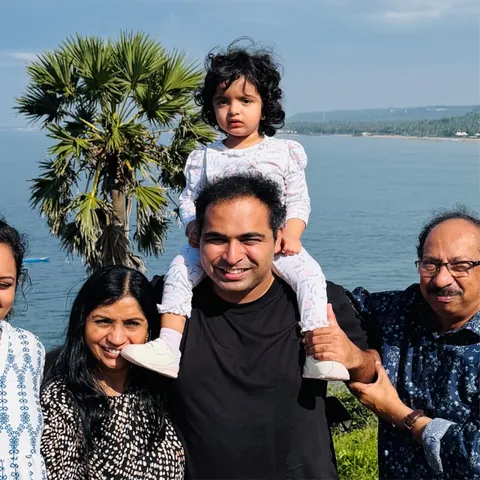 By Akhil Suresh NairFounder & CEO, Xena Intelligence · 1,522 words
The same night I was named Louisville's Favorite Founder at the 2025 LOUIES, my company won the SPAM Award.
Both of these are real. KYX printed the full list of winners in its newsletter that December, a few lines apart. Louisville's Favorite Founder: Akhil Nair. SPAM Award: XENA Intelligence, with a little envelope emoji next to it, in case anyone missed the point.
I have decided to read the second one as a lifetime achievement award for cold emailing. Nobody told me that's what it was for. Nobody had to. When you build a company from Louisville with no US network, every customer, every investor meeting and every stage starts with an email to someone who has never heard of you. I would estimate the good ones were the minority, and I'd prefer not to check. Over four years, that adds up to a reputation.
So I accept both awards. One is the polite version of the other.
The two questions
In 2022, when I told people I was building an AI company in Louisville to help consumer brands sell on Amazon and Walmart, I got two reactions. Either "why AI" or "why Louisville."
Usually both.
What people asked in 2022 when I said "AI company in Louisville"
IllustrativeNobody kept count, least of all me. The one real data point is my own summary on LinkedIn: "Usually both."
The first question has aged well, for me anyway. Back then, "why AI" was a fair thing to ask a founder automating Amazon and Walmart ad campaigns. These days nobody asks me that one. I'll take the win and not look too closely at how much of it was timing.
The second question is the one that stuck around.
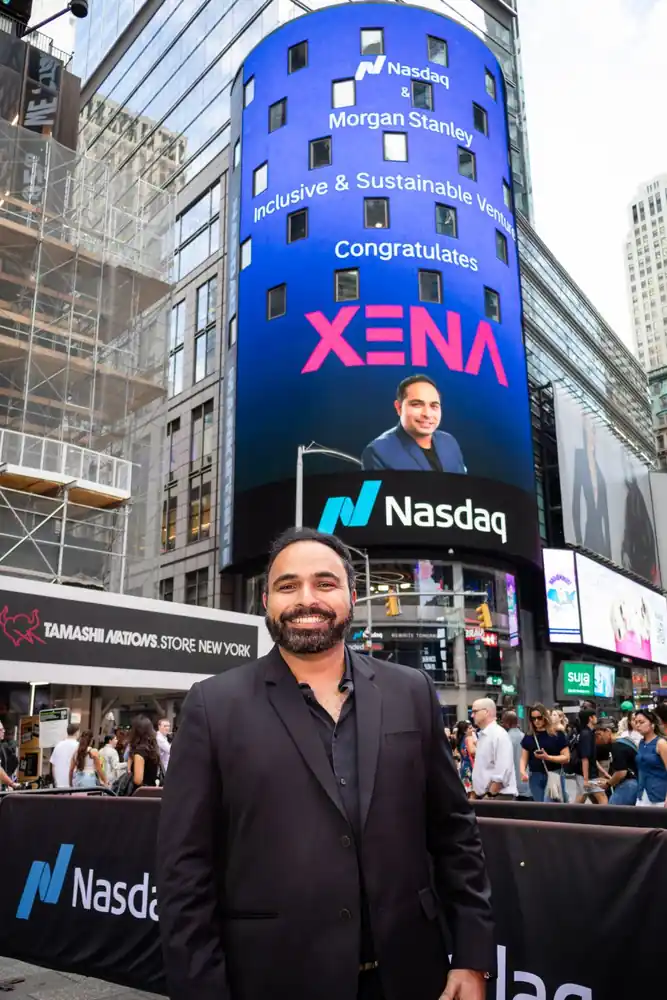
The short answer to "why Louisville" has always been a pitch competition. In 2022 I won the Render competition and the Vogt Awards here, and the Render money came with a condition that the company move to Louisville. I've written about the fine print before, so I'll spare you. I moved my company and my life here. The same year, Xena got into Techstars NYC, so my first year as a Kentucky company came with a New York accelerator attached. I stopped trying to explain that on forms.
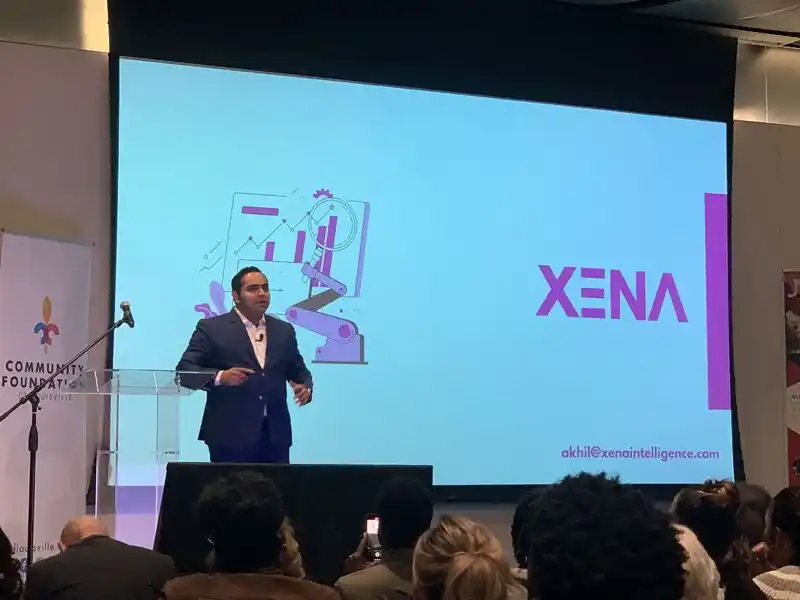
The longer answer is about why I stayed after people told me to leave.
"If you were serious"
I got told, more than once, that if I was serious I should move to San Francisco or New York. The talent wasn't here. The capital wasn't here. The ecosystem wasn't here. That was the general argument, and it usually came from people who meant well and had a point.
I won't pretend the advice was all wrong. I applied to pitch at Venture Atlanta four years in a row before they said yes, and I've met plenty of founders on the coasts who got there faster. Every investor meeting I ever had came from asking, because there was no network doing the asking for me.
I stayed anyway.
Partly out of stubbornness, honestly. I'd already moved across the world once with one suitcase. Moving again because of one piece of advice felt like a lot of packing for an opinion.
But mostly I had a hunch, and I'll try to describe it without making it sound smarter in hindsight than it was.
My hunch was that the next wave of trade wouldn't run through ports and factories the way the last one did. It would run through search results, product pages and, now, AI assistants. A shopper in Ohio or Dubai doesn't know what city a product listing was written in. Amazon doesn't ask. ChatGPT definitely doesn't ask. If the work is good, it travels, and it doesn't need a San Francisco zip code to do it.
That is still roughly the bet. These days shoppers ask ChatGPT, Gemini and Perplexity what to buy, and most brands have no idea whether they show up in the answer. SearchPanel tracks that. None of it requires me to be within driving distance of Sand Hill Road. It requires a good engineering team, a lot of data and a founder who sends email. I have an award confirming that I send email.
Kentucky has done this before
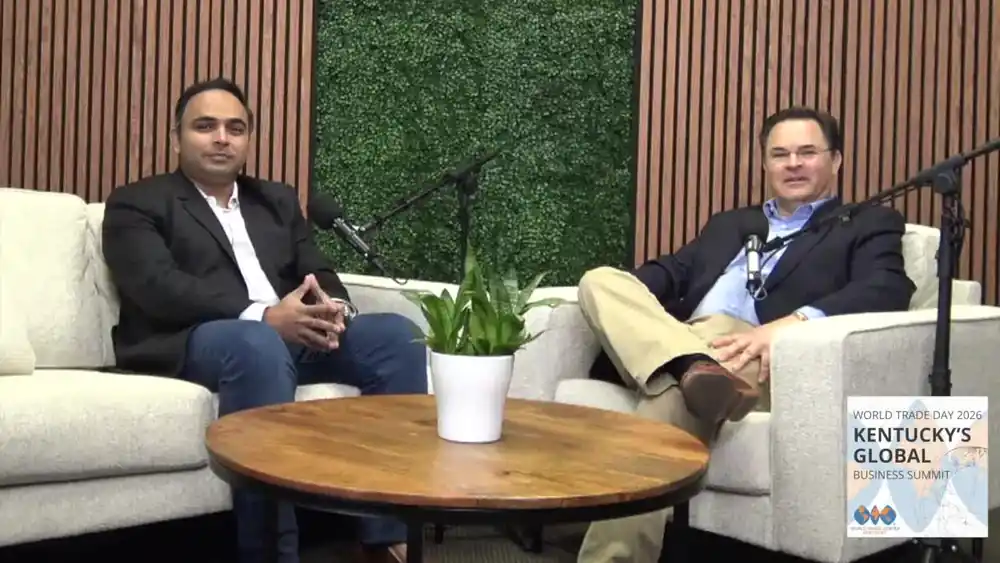
This year, Xena won the Martha Layne Collins Award for Excellence in AI and Digital Trade Innovation, presented by World Trade Center Kentucky at World Trade Day 2026.
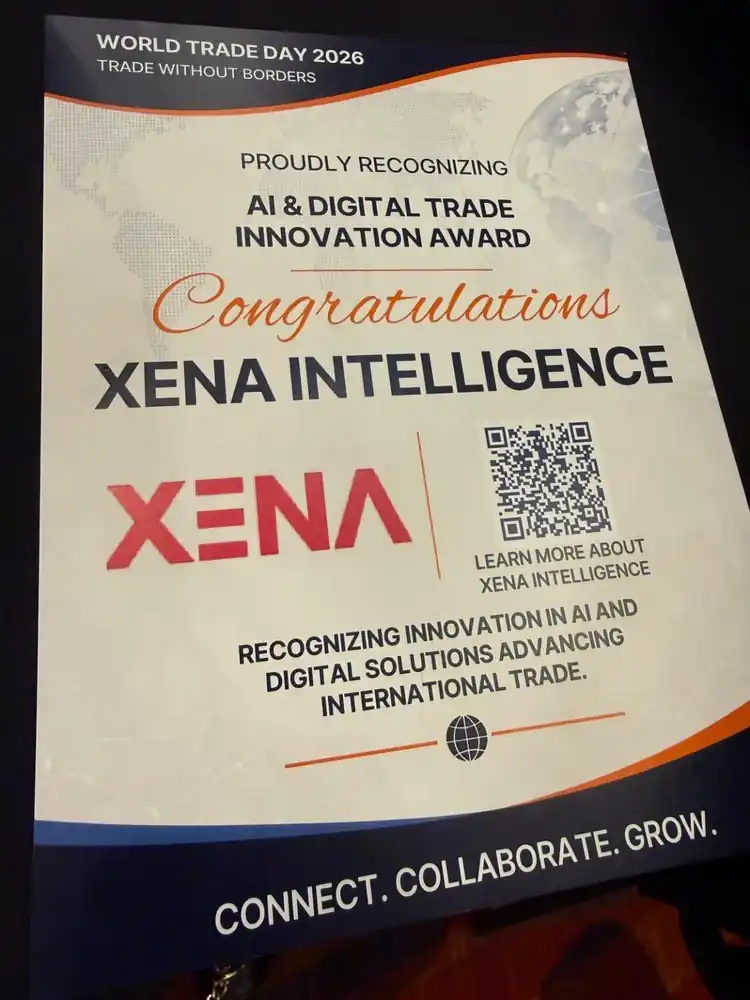
AI and Digital Trade Innovation. Five years ago that category did not exist. I'm proud that the Commonwealth created it, and a little amused that a company once told to leave Kentucky ended up winning it.
The award is named after Governor Martha Layne Collins. In 1985 she negotiated the deal that brought Toyota's first standalone US plant to Georgetown, Kentucky. She bet on a version of Kentucky that didn't exist yet. After her term, she went on to lead World Trade Center Kentucky, the same organization that now hands out the award in her name.
What I like about her story is how unglamorous it is. A governor did the paperwork on a car plant in Georgetown. Nearly forty years later, Toyota Motor Manufacturing Kentucky shows up in the same award archive as Xena. So does Dippin' Dots. I'm choosing to be honored by both.
When I posted about the award, I wrote that the next Toyota-sized bet for Kentucky might be made of software. I still think that. I also know how that sentence sounds coming from the guy who just won the award, so I'll let it sit there and not add a slide.
Two award nights, by the numbers
Sources: KYX's The Distill, Dec 8, 2025; World Trade Center Kentucky's Martha Layne Collins Award page; my LinkedIn post of Mar 19, 2025.
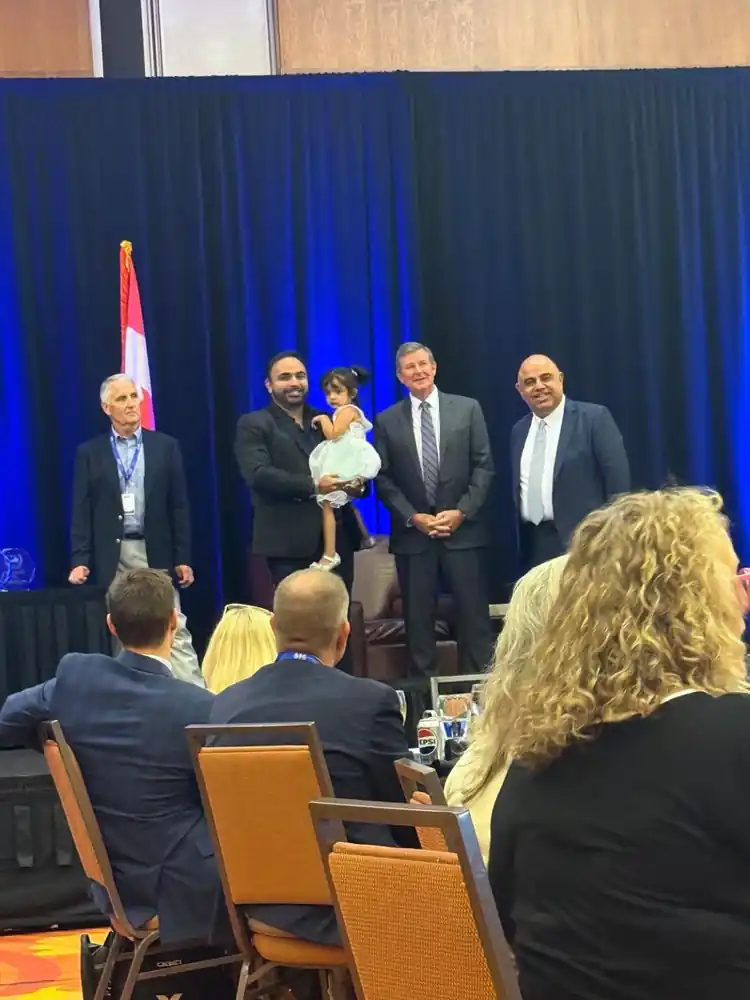
In the photo from that day I'm on stage with the presenters, holding my daughter in a white dress. Of everyone on that stage, I suspect she was the least impressed. I have no evidence for that. It's a guess based on her age.
A Louisville company in the Gulf
The part of this I enjoy explaining most is the international part, because it confuses people in both directions.
When I was young, Dubai was an aspirational place to go to, full of opportunities. In March 2025, Xena expanded into the GCC region, starting with the UAE and Saudi Arabia. By the time I announced it, we had signed our first couple of customers there. In April, Louisville Business First ran a story with the headline "Louisville's Xena Intelligence grows revenue, enters Middle East," and the photo they used was taken at a hotel on Whiskey Row. I'm not sure a headline can be more Kentucky and less Kentucky at the same time.
I didn't do the hard part of that expansion. Izzu PK did. He is Xena's first and longest team member and my friend, and he moved his entire base to a new country, learned its cultural nuances and built a pipeline there faster than I could have. I said at the time that I wished I was as good at it as he was. I still do.
I also asked, on LinkedIn, whether this made Xena an MNC. Multinational company. I answered "Perhaps" and added a smiley face, which is about as confident as I get in writing.
How an AI company ended up staying in Louisville
- 2017Arrived in the USBabson College's Global Entrepreneur-in-Residence program. One suitcase.
- 2022 YesRender and Vogt AwardsTwo Louisville wins. Moved the company and my life here. Techstars NYC the same year.
- 2022 and after No"Move to San Francisco"Heard more than once. Stayed.
- Mar 2025 YesInto the GulfExpansion to the UAE and Saudi Arabia, led on the ground by Izzu PK.
- Dec 2025The LOUIESLouisville's Favorite Founder, and the SPAM Award for Xena. Same night.
- Feb 2026Global Executive ForumOn the panel lineup for taking Kentucky businesses into the UAE, hosted by World Trade Center Kentucky and UofL's College of Business.
- 2026 YesMartha Layne Collins AwardAI and Digital Trade Innovation, World Trade Day 2026.
From my LinkedIn posts (Mar 19, 2025; Dec 29, 2025; Aug 31, 2026), KYX's The Distill (Dec 8, 2025) and the facts on this site.
Then, last winter, World Trade Center Kentucky and the University of Louisville College of Business put together a Global Executive Forum on expanding Kentucky businesses into the UAE, and I was on the panel lineup. A few years earlier people were asking why my company was in Kentucky at all. Now Kentucky was asking my company how to get to the Gulf.
What I wrote about it beforehand was simple. The most common mistake I've seen is copying what worked in the US and hoping it magically works elsewhere. International growth is about culture, buying behavior, trust, regulation and timing, and about knowing when data helps and when instinct matters. I suspect the same applies to moving from Kochi to Kentucky, though nobody has put me on a panel about that yet.
What I'd say now
So, why AI? Because the way people find and buy products was changing, and I wanted to build the tools for where it was going rather than where it had been.
Why Louisville? Because a pitch competition put me here, the city kept showing up for me, and I never found a good enough reason to leave. Render Capital, Keyhorse Capital and Bluegrass Angels all backed this company from Kentucky. The people who invested in my idea here did it before there was much to point at.
One of them, Larry Horn, won the Founder Therapist Award at the same LOUIES where Xena won the SPAM Award. I'm not saying I contributed to his win. I'm not saying I didn't.
To my founder friends, stay around long enough, and you might succeed.
I'm still here, four years after people told me to leave. I'm still getting the second question, mostly from people who haven't been to Louisville. And I'm still sending a lot of email, carefully now, because I have a title to defend.
If you're building somewhere people keep asking you to justify, I'd like to hear where. I write about the less polished parts of building Xena in my Founder's Diary newsletter (opens in a new tab) on LinkedIn, and the day-to-day version lives on Instagram at @akhilsuresh (opens in a new tab). If you'd rather talk, my calendar is at meeting.akhilsureshnair.com (opens in a new tab). I promise the reply will not be spam.
Still in Louisville,
Akhil
Newsletter
Notes from Akhil
Occasional notes on building Xena Intelligence and SearchPanel from Louisville: what's working, what isn't, and what I'm learning.
Get the next entry. Founder's Diary lands on LinkedIn first. Behind-the-scenes moments go on Instagram.