A 70% Answer on Tuesday
 By Akhil Suresh NairFounder & CEO, Xena Intelligence · 1,347 words
On October 2, I posted on LinkedIn that the longer you're a founder, the more you realize speed covers up a lot of mistakes.
People liked it. A few of them told me they sent it to their teams. I can only imagine how those teams felt about a forwarded LinkedIn post from their boss with the word "speed" in the first line.
I still believe it. I also have to admit something that sits a little awkwardly next to it. Some of the most important things that happened to Xena took years, and no amount of hurrying would have changed that. So this post is me trying to keep both ideas in my head at once, which is roughly what being a founder feels like most weeks anyway.
The deals I lost slowly
The part of that post I stand behind most is the part about losing. I have been running Xena for about five years, and I have lost deals in those five years. When I go back through the ones I remember, I can't find one I lost because I moved too fast. The ones I can find, I lost because I moved too slow.
The examples are not dramatic. A pitch deck I polished for two weeks. A proposal I rewrote four times. In my head, each extra round was making the thing better. In the other person's calendar, each extra round was a week where nothing arrived from me, and something else probably did.
That is the trap with polish. It feels like work, and your laptop even gets warm. From the outside it looks exactly like silence.
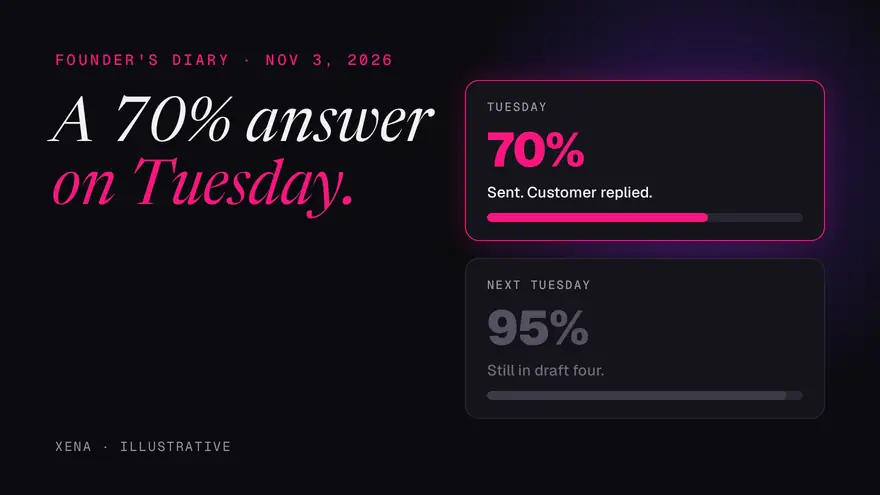
Speed means a 70% answer today beats a 95% answer next week, because the customer only remembers when you showed up.
I want to be fair to the 95% answer. It is a better answer. If you could deliver it today, you should. The problem is that it never shows up today. It shows up next week, after the customer has solved it some other way and filed us under companies that take a week.
What a customer actually remembers
Most of Xena's work happens on Amazon and Walmart, and a lot of it is unglamorous. One example I used in that post was the buy box. On Amazon, that's the box with the "Add to Cart" button. If a brand loses it on a product, the button can go to another seller or disappear, and sales drop while everyone stares at a dashboard trying to work out why. That is a fire. Nobody in that moment wants a beautifully formatted memo about fire. They want someone who says "I'm on it" and then is.
I wrote that customers remember the Tuesday you fixed the buy box fire in four hours, and they do not remember the font you used. I'd like to report that I learned this from a wise mentor. I learned it by caring about fonts for longer than I should have.
What a customer remembers a month later
IllustrativeNot real data. Scored by me, from the customer side of a lot of calls. The font bar was generous.
There's a second thing speed does that I didn't spell out in the post. A fast 70% answer gets corrected. The customer reads it, says "close, but we actually sell these mostly in bundles," and now the second version is better than any 95% version I would have written alone, because I was guessing about bundles. Sending early is a way of borrowing the customer's brain. They don't seem to mind. Most of them would rather fix a draft than wait for a perfect one.
The calendar that proved my point, sort of
In the same post I mentioned that my calendar that day had a lawyer call at 2:30 and movie tickets at 2:35. I called it a founder optimizing for both justice and cinema.
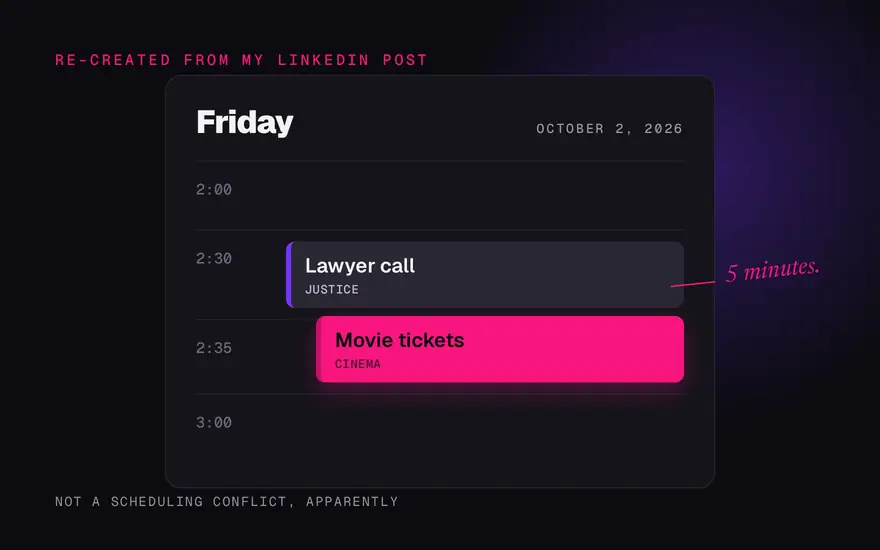
I'm not going to tell you how the next five minutes went, partly because lawyers read LinkedIn too. I will say that, up close, speed looks less like a sleek machine and more like a person who has said yes to two things that technically overlap and has decided to find out what happens.
The year speed actually worked
I don't want to make this sound like a theory. There was a year when moving fast was most of what we had, and it worked.
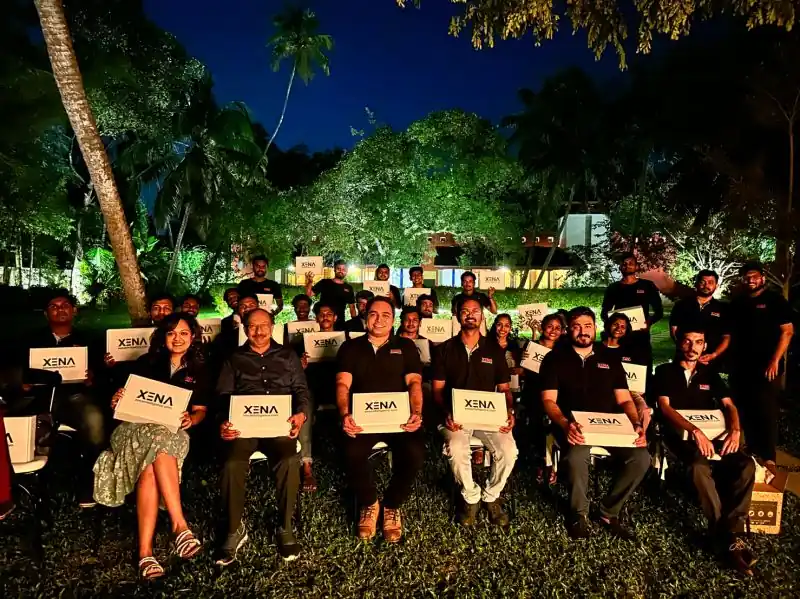
In 2022 we were a Techstars NYC company, we had just moved Xena to Louisville after winning Render and the Vogt Awards, and I was hiring people faster than I could learn their coffee orders. In November I posted that we had gone from 2 to 20 people in a year. In January I posted our wrap-up for 2022.
Xena's 2022, as I posted it
From my LinkedIn posts of Nov 21, 2022 (2 to 20 people in a year) and Jan 10, 2023 (2022 wrap-up, which also listed 25 full-time employees and an 8% average TACOS).
None of that came from a perfect plan. A lot of it came from saying yes on a Tuesday and figuring out the details by Thursday. Some of those details I figured out well. Some I figured out at 11 pm. As I wrote in October, everything I've built from Kochi to Kentucky came from showing up fast and fixing it later. Some of it I fixed. Most of it is still in the backlog.
The things that refused to go fast
Now the awkward part.
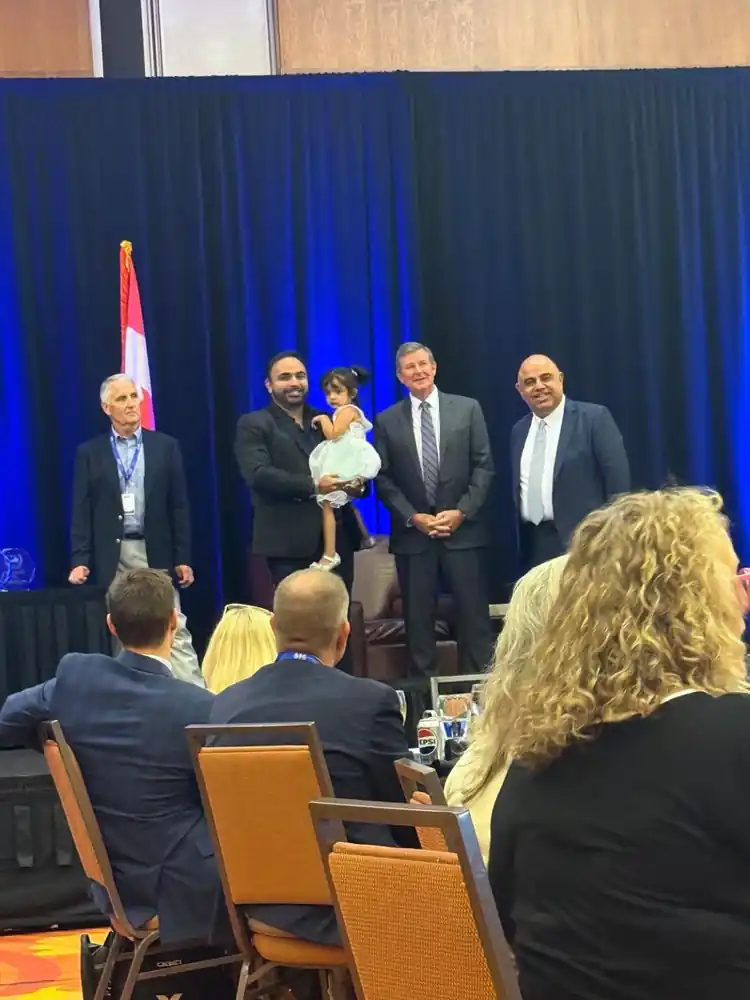
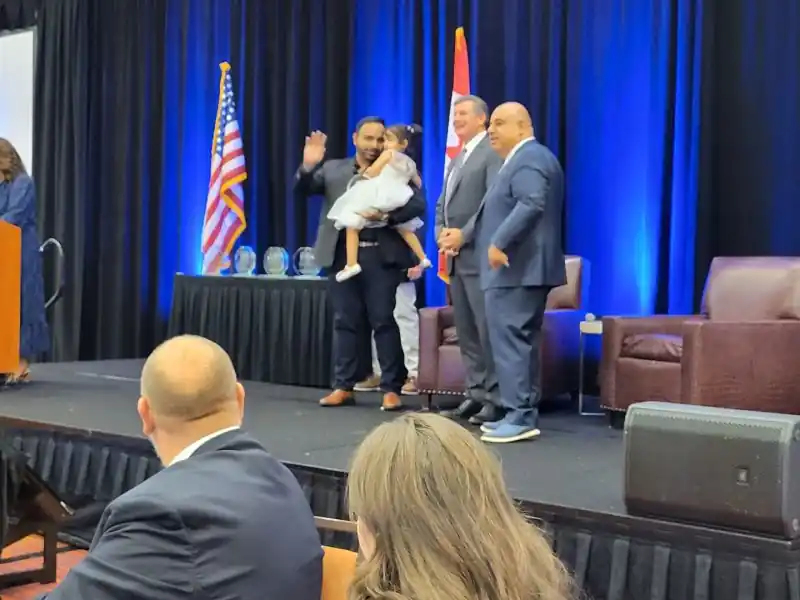
If speed fixed everything, my timeline would look very different. Techstars turned me down several times before they accepted us in 2022. I applied to pitch at Venture Atlanta four years in a row, and the first three answers were polite no's. I priced Xena 360 too low for about two years before someone told me to raise the floor, and I wrote about that slow, expensive lesson last week. And I gave a whole post to the 100,000 minutes of practice behind 120 seconds on stage, which is the least speedy ratio I know.
Things in my life that ignored my opinion about speed
- Techstars YesSeveral no's, then a yesAccepted to Techstars NYC in 2022, after more "thank you for your interest" emails than I'd like to count.
- Pricing NoAbout two years too lowI raised the new-client floor only after someone else told me to. Nobody blinked.
- Venture Atlanta YesThree no's, then a yesPitched on October 14, 2026, slot 27 of 28.
- Stage fright NoStill hereEvery pitch still starts with my heart being loud. The practice makes it survivable, not gone.
I looked at that list for a while, trying to find the common thread, and the best I came up with is this. Speed is great for anything where the other person is waiting for you. It's useless for anything where you are waiting to become someone.
A customer with a buy box problem is waiting for me. A Venture Atlanta selection committee is not. They are waiting for the company to be ready, and the company gets ready on its own schedule. Same with stage fright. I can't answer my nerves 70% faster. I can only do the reps, and the reps take the time they take.
Pricing is the one that embarrasses me, because it belonged in the first group and I treated it like the second. I kept waiting to feel like a person who charges more. The feeling never arrived. The new price did, eventually, after someone said it out loud for me. If I could go back and apply my own speed rule anywhere, it would be there.
How I try to sort it now
I don't have a framework. I have two questions I ask myself, usually while walking between meetings.
The first is "who is waiting?" If a customer or a teammate asked for something, I try to send the 70% version today and say plainly that it's a first pass. If nobody is waiting and I'm the one trying to get better at something, I stop rushing and put in the hours.
The second is "am I polishing, or hiding?" That one is harder, because from the inside they feel the same. When I'm on round four of a proposal, it is usually the second one. Round four rarely makes anything better. Mostly it pushes back the moment someone can say no to it.
Speed doesn't mean sloppy. Sloppy gets caught whether you're fast or slow.
I still get this wrong. Some weeks I send a reply in four minutes and then spend four days on a slide nobody asked for. I'm told this is normal. I'm also told by my team that the slide was fine on day one.
If you want to watch me keep getting it slightly wrong in public, I write the longer version of these in my Founder's Diary newsletter on LinkedIn (opens in a new tab), and the day-to-day version, with fewer charts, is on Instagram (opens in a new tab). If you run a brand and you have a buy box fire, or any other fire, my calendar is open (opens in a new tab). I'll try to reply before the 95% version of me has finished thinking about it.
Akhil
Newsletter
Notes from Akhil
Occasional notes on building Xena Intelligence and SearchPanel from Louisville: what's working, what isn't, and what I'm learning.
Get the next entry. Founder's Diary lands on LinkedIn first. Behind-the-scenes moments go on Instagram.