The Kid Who Wanted to Make Films
 By Akhil Suresh NairFounder & CEO, Xena Intelligence · 1,387 words
When I was in school, I wanted to make films.
I wrote short stories and screenplays. I roped friends into acting in them. I borrowed whatever equipment I could find, and then I stayed up late editing on outdated software, cutting shots together frame by frame and laying soundtracks over the top. For a while I seriously considered doing it for a living.
My filmography from that period is not available on any streaming service. This is the kindest outcome for everyone involved.
I went the other way. E-commerce at Hindustan Times in Delhi, then an MBA at Babson, then a company called Xena Intelligence that helps consumer brands make sense of what is happening to them on Amazon and Walmart. Nobody who sat near me in that Delhi office would have guessed I once had strong opinions about background music.
I didn't think about the film kid much for years. Then, in June 2025, I made an ad.
The ad
Every part of it was generated with AI. The script and the idea were mine. Everything else came out of a few hours with some AI tools. No crew, no camera, no budget, which for a startup video is the ideal production schedule.
The whole ad hung on one line: "Your competitors are guessing. You're using Xena."
When I posted it, I reviewed it myself before anyone else could.
Now, let me be the first to say: it's not perfect. Some parts feel slightly off, a few transitions are rough, and no one's giving Spielberg a run for their money just yet.
I stand by that review. A few of the transitions were rough in exactly the way my school edits were rough, which made me feel oddly at home. What surprised me was how fast the old feeling came back. Late at night, one idea, trying to get the picture on the screen to match the one in my head. I hadn't felt that in years, and I had not expected to feel it while making an ad for an analytics company.
The part I keep thinking about is the split. The tools handled the camera, the actors, the set and the edit. The only part they left for me was deciding what the thing was about. In school that was also the only part I was any good at. I could never get a borrowed camera to focus. I could always tell you what the scene was for.
Every pitch is a two-minute film
Making the ad made me notice something about the other part of my job, the one with a stage.
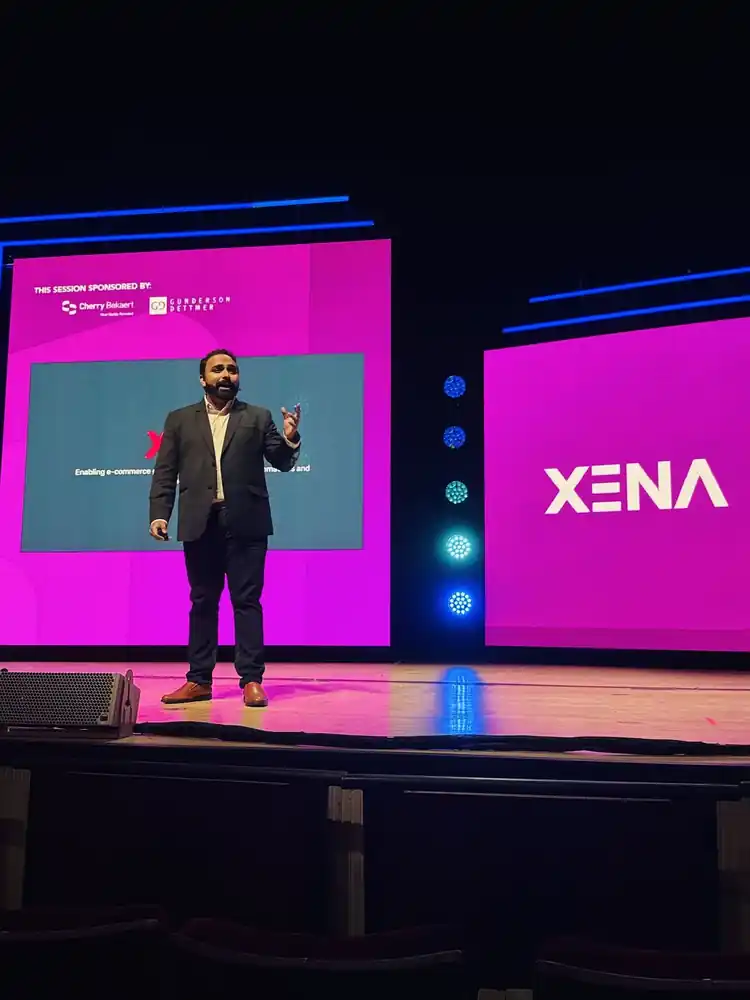
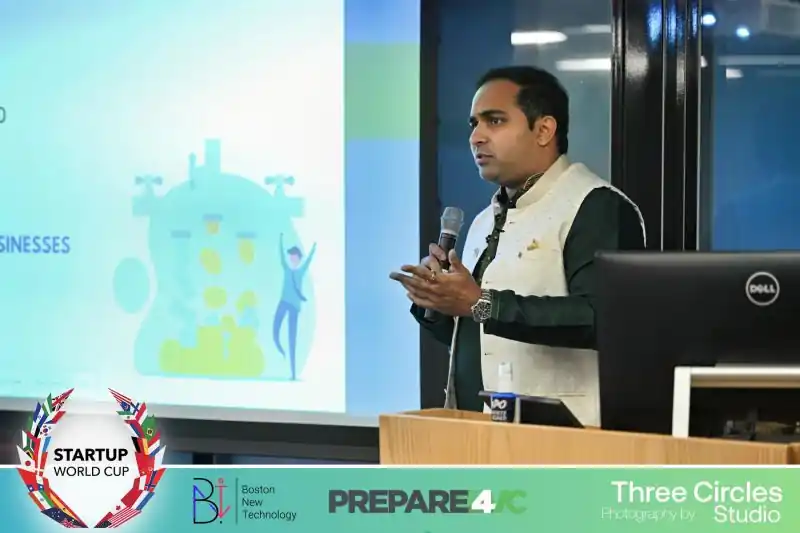
I have won more than $1.65 million in pitch competitions, across more than 40 of them. A lot of them were short. At RALLY in Indianapolis in September 2025 the clock was two minutes. At the Summerfest TechAI Pitch Competition in Milwaukee this June it was two minutes again. Two minutes is a short film with no budget, one location and a very nervous lead actor.
The short films I make now
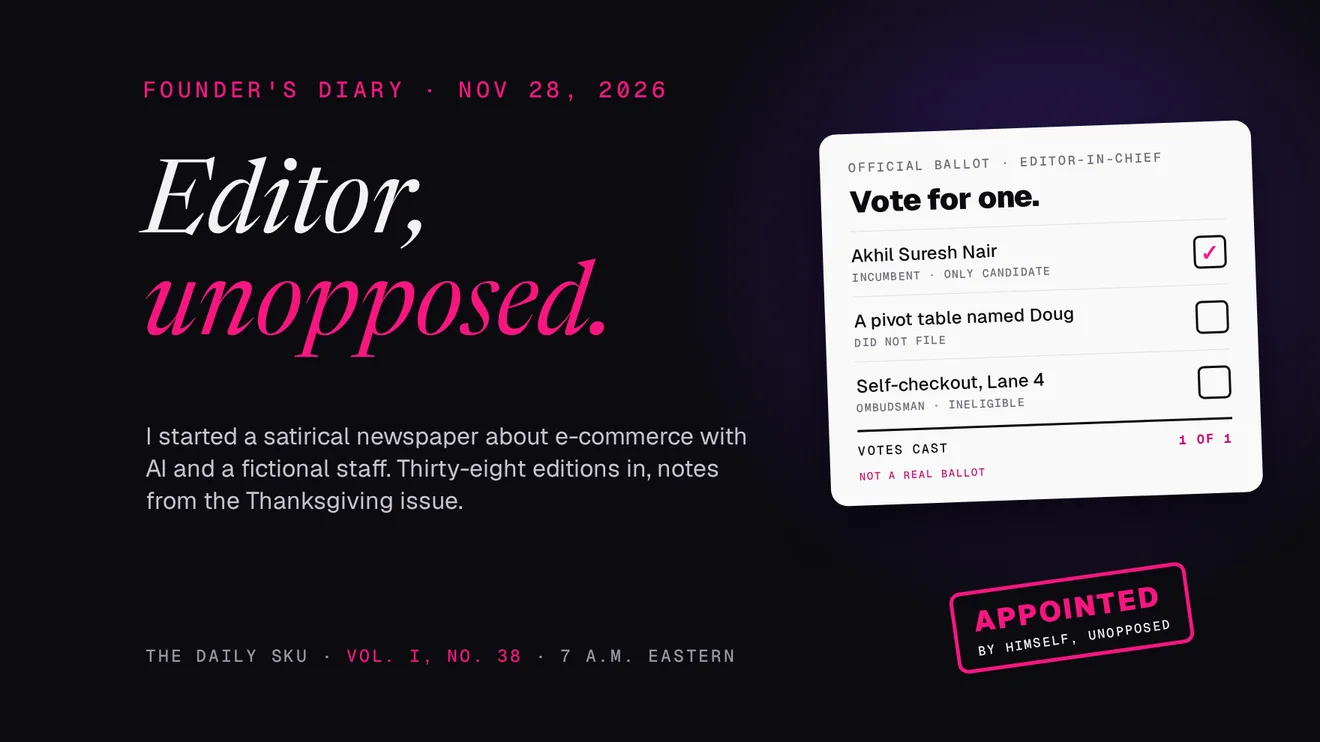
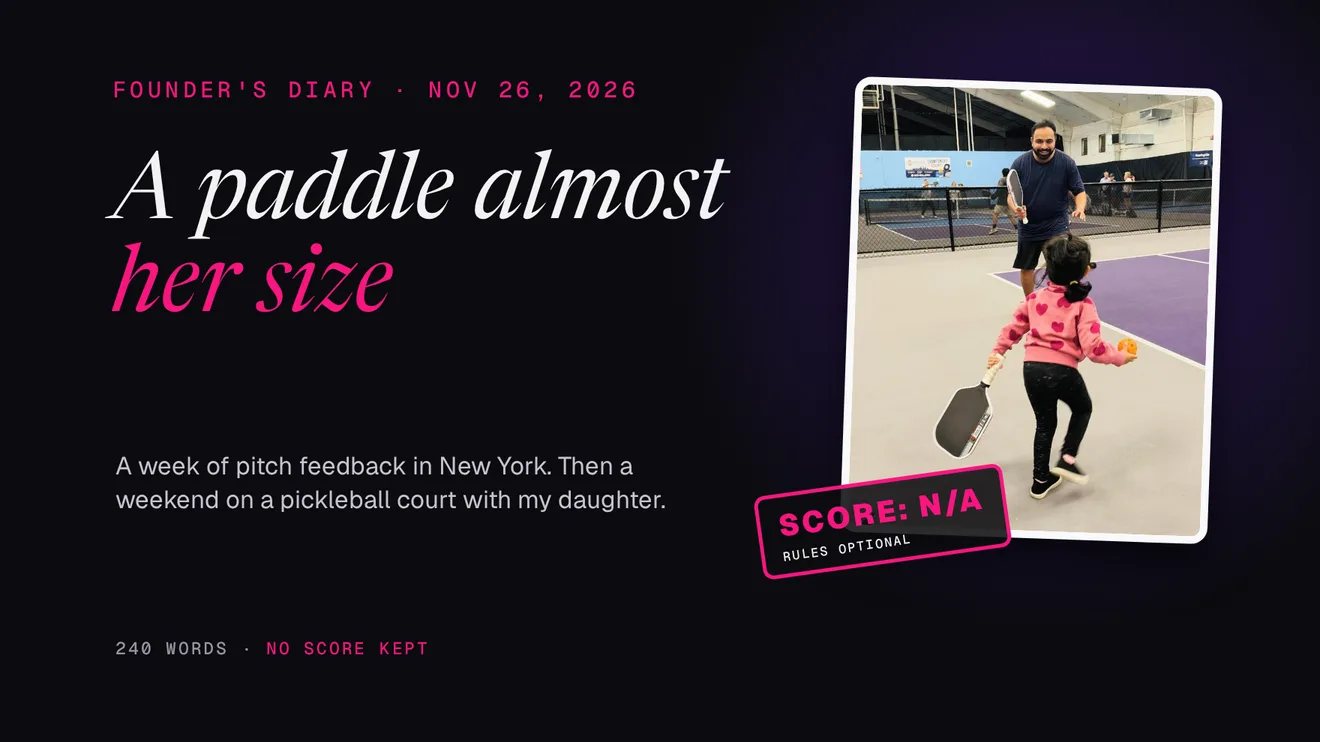
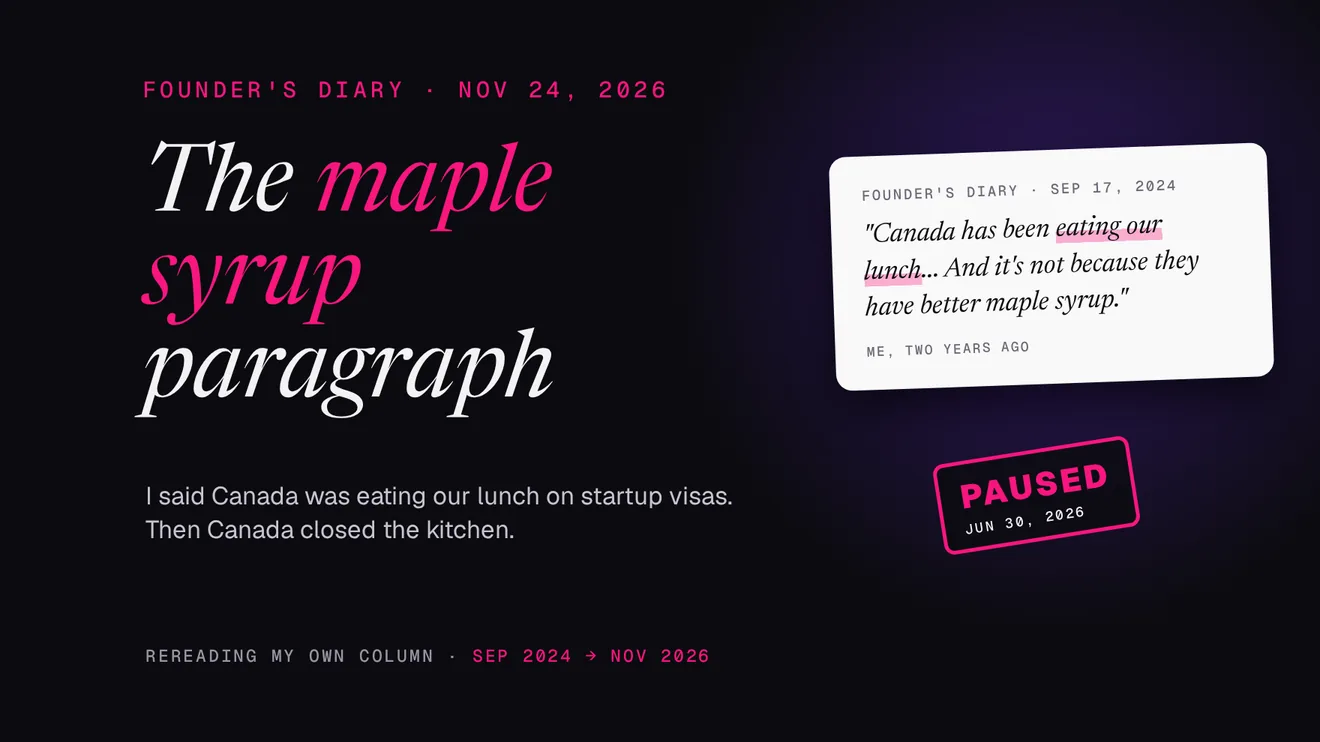
All from my own posts and my Founder's Diary newsletter.
When I started pitching, I edited like a teenager. I put everything in. After Summerfest I wrote that I used to over-prepare, over-explain, and watch the room drift somewhere around slide four. I confused detail with conviction.
Any film teacher could have named that problem in one word, which is cutting. The first cut of a student film is always too long, because the person who shot it loved every take. My early pitches were too long for the same reason. I loved every feature. I loved every customer logo. I loved a chart about advertising spend that, looking back, nobody in those rooms needed to see.
The rehearsal side is where the comparison stops being flattering. An hour before I went up at Summerfest, I was standing in a hallway running the same opening line for the fortieth time. On a film set that is take forty, and a director gets to keep the best one. On a stage you get one take, live, with judges, and no edit afterwards. I also have paralyzing stage fright, which means the lead actor in all my films is the least reliable person on set. I cast him anyway. He works cheap.
My filmography, such as it is
- SchoolShort films with friendsScreenplays, borrowed equipment, outdated editing software. Not available to stream.
- June 2025The Xena adMade with AI tools from start to finish. Script and idea by me.
- Sept 2025RALLY, IndianapolisTwo minutes in front of hundreds of people. We won.
- Apr 1, 2026"Xena has been acquired"Seven short lines and a plot twist involving butter chicken.
- June 2026Summerfest TechAI, MilwaukeeTwo minutes again, after take forty in the hallway. We won.
- Oct 14, 2026Venture AtlantaFour years of applying, then slot 27 of 28.
Dates from my LinkedIn posts and newsletter.
The comedy
The best short film I made this year might be an April Fools post.
On April 1, 2026, I announced on LinkedIn that Xena Intelligence had been acquired. The second line was the reveal: "By my mom." She had been evaluating the business for years, I wrote, with tough diligence questions like "When are you going to get a real job?" and "Why don't you just sell on Amazon yourself?"
Those two questions were not made up for the joke. I listed the same two in my apology letter to my 22-year-old self in September. I still don't have a perfect answer to either of them.
She closed the deal over dinner last night for an undisclosed amount of butter chicken and a promise to call more often.
Then I announced that I would be staying on as Chief Son Officer, declined all media interviews, and rolled the credits with "Happy April 1st."
Looked at as a script, it has everything I tried to put into those school films and mostly couldn't. A setup everyone recognizes, because LinkedIn is full of acquisition announcements. A reveal in line two. One specific detail doing all the work, which is the butter chicken. A callback with some truth in it, which is the promise to call more often. Then credits.
It is also, by a wide margin, the cheapest production I've ever made. No AI tools. No rehearsals in a hallway. One parent, who was cast without an audition.
Three of my short films, by LinkedIn impressions
From my own LinkedIn analytics for my 50 best-performing posts.
The joke about my mom reached almost three times as many people as the ad that took a stack of AI tools to make. I'm choosing to read that as a comment on the script and not on the AI tools, mostly because I wrote the script.
What the tools changed, and what they didn't
In my post about the ad I wrote that the barrier between idea and execution keeps shrinking. I still think that's right. A kid in school today with a phone and a few AI tools can make something that looks better than anything I ever made with a borrowed camera. I'm a little jealous of that kid, and a little relieved that my own early work came before everyone had a camera in their pocket.
But making the ad also showed me which part didn't shrink. The tools would not tell me what the ad was about. They would not tell me that "Your competitors are guessing" was the line and everything else was decoration. That was the same job I had in school, with a few friends standing around in costume, waiting for me to decide where the camera goes.
I run into this at Xena all the time now. One of the things we built, SearchPanel, looks at how AI platforms like ChatGPT, Gemini and Amazon Rufus describe and recommend products. My guess, after looking at a lot of product pages, is that brands who can say what they are about in one sentence have an easier time with people and with models. That is my opinion. I have not run a study on it. It is also the note I would have given my own student films.
The kid's review
I don't think the kid with the borrowed camera would be disappointed in how this turned out. He would have notes. He would say the RALLY pitch could have lost ten seconds in the middle. He would ask why the lead actor looks so nervous in every single scene. He would also want to talk about September, when the XENA logo went up on the Nasdaq screen in Times Square. That is the biggest screen anything of mine has ever played on, even if the runtime was short and the plot was a logo.
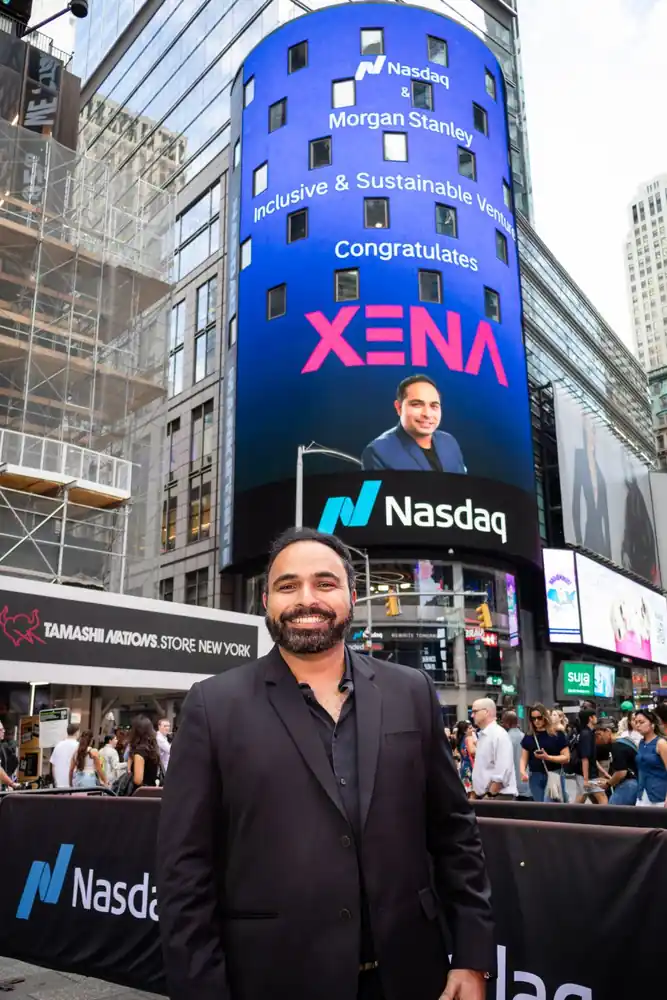
He would probably also point out that he never stopped making films. He changed the format to two minutes, a pitch deck and the occasional April Fools post at his mother's expense, and he stopped needing to borrow the camera.
I'll keep posting the new ones. The longer cuts go out in my Founder's Diary newsletter on LinkedIn (opens in a new tab). Instagram, at @akhilsuresh (opens in a new tab), is mostly behind-the-scenes footage starring my daughter, who also did not audition. And if you run a brand and want to see whether ChatGPT can say what your product is about in one sentence, my calendar is open at meeting.akhilsureshnair.com (opens in a new tab). Bring popcorn if you like. I'll bring the charts.
Newsletter
Notes from Akhil
Occasional notes on building Xena Intelligence and SearchPanel from Louisville: what's working, what isn't, and what I'm learning.
Get the next entry. Founder's Diary lands on LinkedIn first. Behind-the-scenes moments go on Instagram.