The Stage Claps. The Zoom Does Not.
 By Akhil Suresh NairFounder & CEO, Xena Intelligence · 1,559 words

I have a version of myself that works under stage lights, and a version that shrinks on a laptop camera, and for a long time I kept pretending they were the same person.
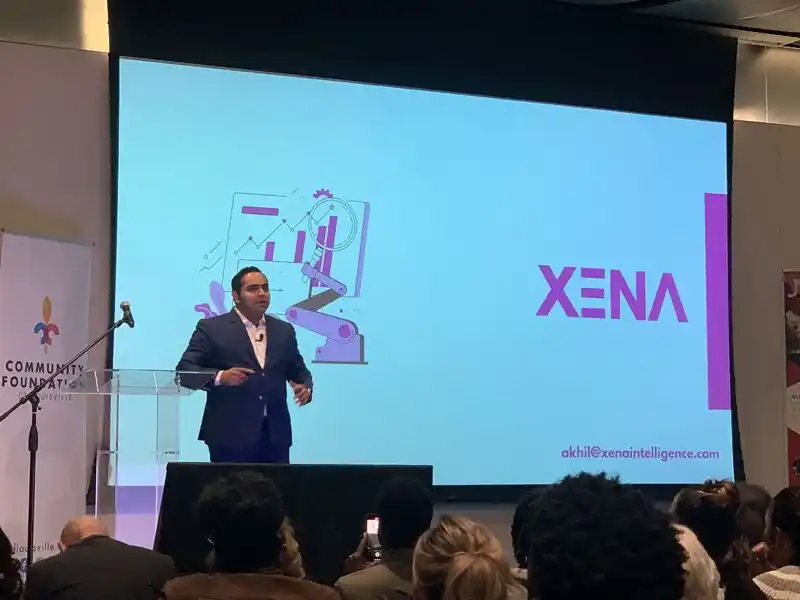
The stage version has a script. He knows where the laugh goes. He has practiced the first twenty seconds until his hands can shake and the words still come out. When he finishes, people clap, which is a generous invention, and someone takes a photo of him holding something rectangular.
The Zoom version opens a calendar link, checks that his face is lit, and spends the first minute hoping the other person is still joining. Nobody claps when a sales call ends. The polite ones say "this was helpful" and the rest just leave the meeting. There is no oversized check. There is a follow-up email you will rewrite three times.
I have won more than $1.65 million in pitch competitions. I have also sat on Zoom calls where a brand marketing director asked a simple question about our work on Amazon and Walmart, and my brain treated it like a hostile takeover. The money and the nerves both belong to me. They just refuse to sit in the same room.
What a stage actually buys you
A pitch is a fixed sport. Two minutes, five minutes, ten. Judges who agreed to sit there. A slide deck that got frozen two weeks earlier. An audience that, in the best cases, already likes founders.
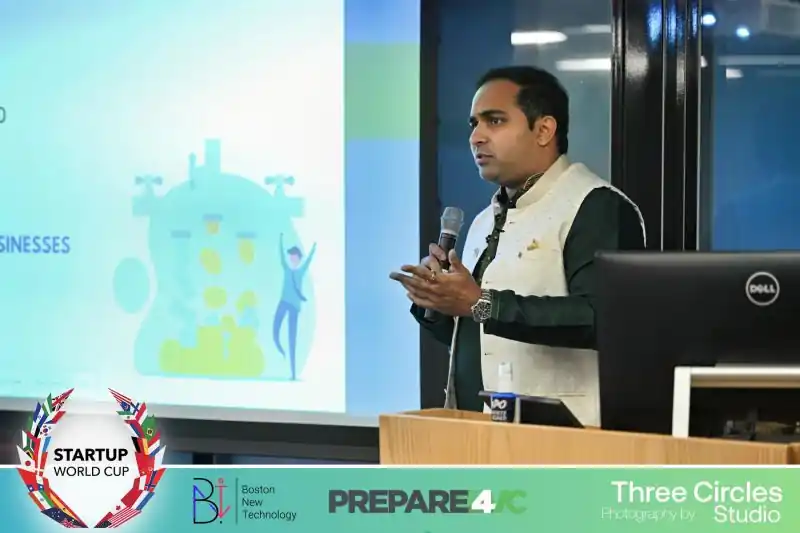
I have done more than forty of these. Render. The Vogt Awards. Techstars. The regional leg of the Startup World Cup. SAAS NORTH, where the audience voted. Venture Atlanta on October 14, 2026, after four years of applying. RALLY in Indianapolis, where the clock was two minutes and the room was hundreds of people. I have written about the practice behind those minutes before, so I will not retell the bathroom-and-stairwell part here. The short version is that I can walk onto a stage now. I still hate it. I can do it.
What the stage buys you, if you win, is money, press, a photo, and a temporary feeling that you know how to talk about your company. What it does not buy you is the next customer. I wrote that a trophy has never renewed a contract, and I meant it as a warning to myself as much as to anyone else.
A trophy has never renewed a contract.
The problem is that winning a room feels adjacent to selling. Both involve talking. Both involve a room, even if one of the rooms is a rectangle on a screen. Both involve someone deciding whether they believe you. So your brain files them under the same skill, and then you show up to a sales call with your pitch muscles and wonder why the other person is not nodding on cue.
Forty minutes with a buyer
A mid-market brand buyer is not a judge. They did not fly in to score founders. They have a Tuesday. They have an agency, or an in-house team, or a spreadsheet that already claims to explain their Amazon ads. They have a category. They have a boss who asked why TACOS went up last month. They have forty minutes, and they will use most of them to work out whether you are going to waste their time.
I used to open those calls the way I opened pitches. Problem, market, product, proof, ask. It is a clean structure. It is also a speech. Speeches do poorly on Zoom, because the other person can mute you in their head without muting you on the call.
The questions that land are almost never the ones I rehearsed for Q&A on stage. On stage, judges ask about market size and defensibility and why now. On a sales call, a brand asks whether we have worked with anyone in their exact aisle, what happens when the buy box goes sideways on a Thursday afternoon, and who picks up the phone when their listing copy needs a human. Xena blends software and managed services for CPG and e-commerce brands on Amazon and Walmart. The software half looks good on a slide. The managed-services half is what the buyer is actually buying on a bad week, and that half does not fit in a two-minute closer.
How useful my stage skills felt on an early sales Zoom
IllustrativeNot real data. Scored by me, from the founder side of a lot of calls I would rather redo.
I want to be clear about what I am not saying. I am not saying pitch competitions were a waste. Render came with a $100,000 investment and a condition that I move Xena to Louisville. The Vogt Awards put $25,000 of non-dilutive money into customer acquisition. Techstars NYC in 2022 changed who would take our meetings. The prizes compounded. The skill of pitching compounded for pitching. It did not automatically compound for selling.
The transfer I kept waiting for
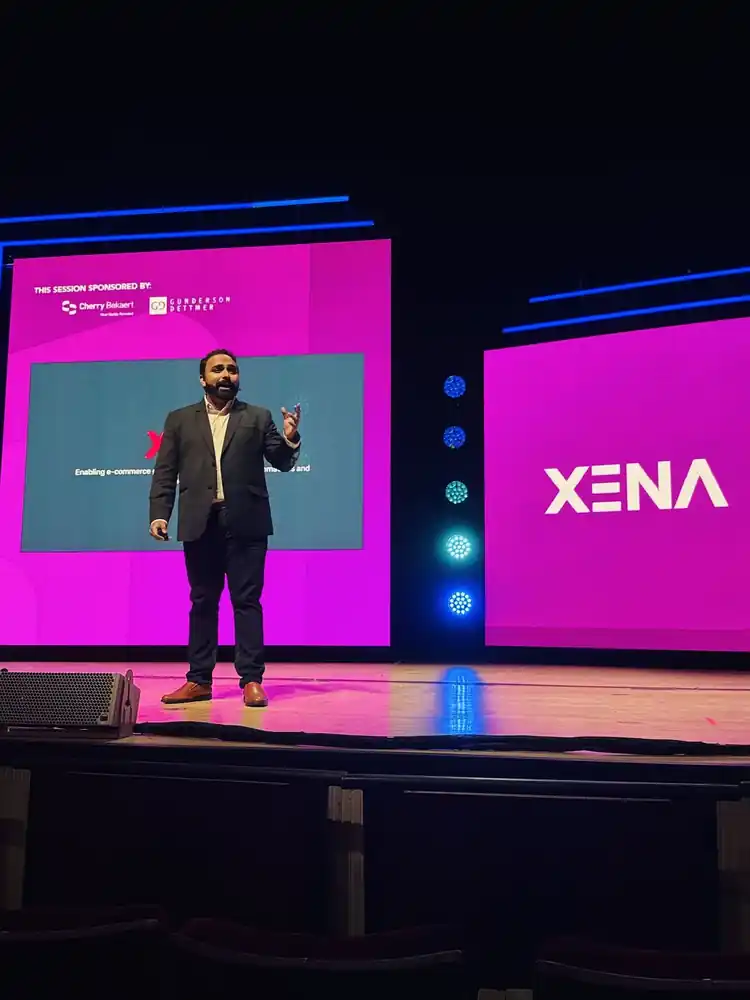
For a few years I waited for the stage confidence to leak into the sales calendar. I figured enough wins would settle the nerves. Enough photos of me between pink XENA screens would convince the Zoom version of me that he belonged on the call.
It did not transfer. Different audience. Different clock. Different failure mode. On stage, failure is public and short. You walk off, someone says you did fine, you go find water. On a sales call, failure is private and slow. You hang up, open a notes doc, and write three paragraphs about what you should have said, which is a sport with no audience and worse odds.
I have also written about pricing, and I am not going to turn this into that post again. I will only say that mumbling a price and freezing on a Zoom share a root. Both happen when you are trying to sound like a person you have not decided you are yet. The stage has a costume for that person. The sales call does not. You are just you, with a share-screen button and a list of brands you have served, including Fortune 500 companies like Nestle, and somehow the list feels thinner when you say it into a laptop.
What the week looks like when both are on the calendar
Some weeks have both. A pitch on Thursday. A sales call on Friday. From the outside that looks efficient. From the inside it looks like borrowing confidence from the wrong account.
After SAAS NORTH, people congratulated me for days. After an ordinary sales call the same month, I sat in my car for a minute because I had talked too much and listened too little. Same founder. Same company. Same week. One room rewarded performance. The other room rewarded attention, and I had shown up ready to perform.
What the company has, versus what a sales call asks for
Public company facts. A buyer rarely asks for the first number first.
The useful split, once I stopped pretending the skills were the same, looked like this. Pitch prep is about compression. Sales prep is about curiosity. For a pitch I cut words. For a call I write down what I do not know about their catalog, their agency setup, and which marketplace is actually paying the bills this quarter. I used to think the highest-status move on a call was having an answer ready. The higher-status move turned out to be asking a question that made it obvious I had read their storefront before I joined.
I still get this wrong. I still catch myself delivering the two-minute pitch inside a forty-minute call, which is a bit like showing up to dinner with a TED Talk. The other person is polite about it. Politeness on a sales call is not progress. Progress is when they start talking about their real mess, the one that never made it onto my slide.
The private scoreboard
Stages publish their scoreboards. You win, or you are a finalist, or you get a photo with a trophy and three other people holding it at slightly different heights. Sales calls keep a private scoreboard that only you can see, and it is mostly made of follow-ups that did not convert and demos that felt fine and then went nowhere.
Xena did not get to 100 brands because I got better at holding a microphone. We got there because the team shipped software, because managed services held up on the weeks when Amazon did something rude, and because enough buyers decided the Zoom version of me was worth a second call. I am proud of the stages. I am more protective of the second calls.
If there is a practical change from writing this down, it is small. I stopped measuring a sales week by how confident I felt walking into it. Confidence is a stage metric. On Zoom I measure whether I left with a clearer picture of their problem than I had when I joined. That is a less photogenic standard. It also matches the job.
I do not have a neat system for making the two versions of me get along. I have a calendar that sometimes puts them on consecutive days, and I keep having to tell myself that the applause from one does not cash at the other.
I write the longer version of these in my Founder's Diary newsletter on LinkedIn (opens in a new tab), and the less formal version shows up on Instagram (opens in a new tab). If you run a brand on Amazon or Walmart and you want to talk about the unglamorous half of growth, my calendar is open (opens in a new tab). I will try to ask better questions than I used to.
Akhil
Newsletter
Notes from Akhil
Occasional notes on building Xena Intelligence and SearchPanel from Louisville: what's working, what isn't, and what I'm learning.
Get the next entry. Founder's Diary lands on LinkedIn first. Behind-the-scenes moments go on Instagram.